With the unique climate and soil conditions here, your lawn’s health depends heavily on regular aeration and dethatching. At Be Happy Property Services, we understand that excess thatch can suffocate grass roots and attract pests, while compacted soil limits nutrient absorption. By choosing a professional Anchorage Landscaping Service for lawn aeration and dethatching, you help your grass thrive, improving overall lawn vitality and appearance. Whether you want to prevent moss buildup or encourage deeper root growth, these treatments are crucial steps in maintaining a lush, resilient lawn in Anchorage’s challenging environment.
Key Takeaways:
- Be Happy Property Services offers expert Anchorage Landscaping Services, including lawn aeration and dethatching, which are essential for maintaining a healthy and vibrant lawn in Anchorage’s unique climate.
- Dethatching removes the thick layer of organic debris that can block water, air, and nutrients from reaching grass roots, helping to revive your lawn and reduce moss growth effectively.
- Regular lawn aeration, paired with dethatching, improves soil quality by allowing deeper water penetration and promoting healthier root systems, making it a top service in the Anchorage Landscaping Service lineup from Be Happy Property Services.
The Role of Dethatching in Lawn Health
What Constitutes Thatch?
Thatch is a dense layer of organic debris, including grass clippings, stems, leaves, and roots, that accumulates between the soil surface and the green grass blades. This layer forms naturally as your lawn grows, but when it becomes too thick—exceeding about half an inch—it can interfere with your grass’s ability to absorb oxygen, water, and nutrients. The buildup results mainly from the slow decomposition of these materials, often exacerbated by over-fertilization or shallow watering habits common in Anchorage’s lawn care routines.
The Dangers of Excessive Thatch
When the thatch layer becomes excessive, it creates a barrier that prevents important elements, such as water and oxygen, from penetrating deeply into the soil. This suffocation can lead to weakened roots, making your grass more vulnerable to drought, diseases, and pests. In Anchorage’s cooler climate, thick thatch also fosters moss growth in dead or thinning patches, further damaging lawn health. Addressing thatch promptly with appropriate dethatching methods restores the proper balance of soil, air, and water.
Excessive thatch doesn’t just choke your grass; it acts as a breeding ground for insects and fungal diseases, which thrive in the warm, moist conditions the layer creates. For example, lawn diseases such as dollar spots and brown patches are closely linked to thick thatch environments. Additionally, pests like chinch bugs often hide beneath thatch, feeding on roots undetected until noticeable damage occurs. Regular dethatching as part of your Anchorage Landscaping Service routine not only removes this problematic layer but also helps prevent infestations and disease outbreaks, giving your lawn a healthier chance to thrive.
Dethatching Techniques: Choosing the Right Method
Manual Raking vs. Power Raking
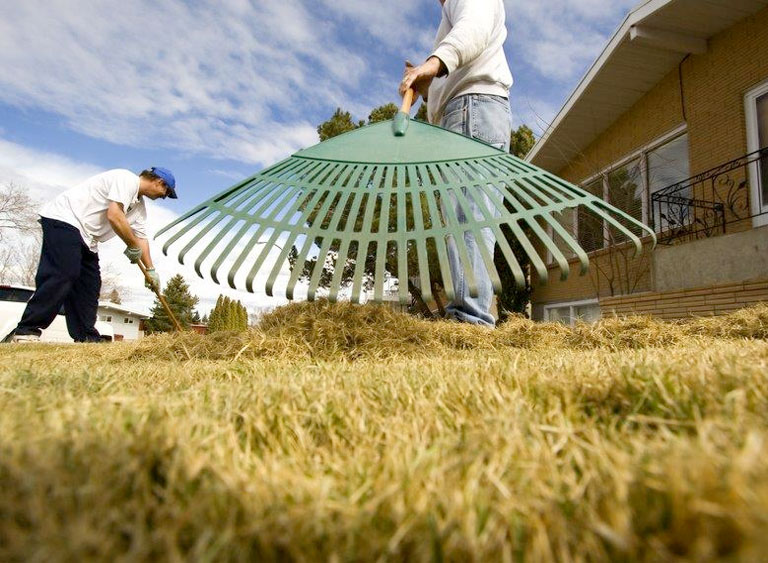
Manual dethatching using a hand rake can be effective for very small or delicate lawn areas, but it is labor-intensive and less thorough. Power raking, on the other hand, uses adjustable blades or tines to quickly remove thick layers of thatch without excessive strain. For lawns common in Anchorage, especially those with Kentucky Bluegrass, power raking is the preferred method to efficiently clear thatch and stimulate new growth. Hand rakes rarely penetrate deeply enough to remove harmful buildup and often leave behind patches of moss or dead grass.
Best Practices for Effective Dethatching
Setting dethatcher blades at the proper height ensures you remove thatch without damaging the grass roots. In Anchorage’s cooler climate, operate power rakes with blades set just above the root zone—if set too low, they risk serious root injury. Perform dethatching during early spring, when grass begins active growth, so your lawn can recover quickly. Following dethatching, watering deeply and mowing at the recommended height of 3.5″ helps seal in moisture and promotes healthy regrowth. Leaving clippings on the lawn after dethatching supports soil organisms that aid in recovery, rather than adding to the thatch.
Proper timing paired with careful blade adjustment maximizes the benefits of dethatching. For example, a mid-April power raking session in Anchorage aligns with upward turf growth, exposing compacted areas that aeration can target next. Avoid dethatching when the soil is wet or frozen, as equipment may tear roots or create ruts. Combining dethatching with your annual aeration service through an Anchorage Landscaping Service provider like Be Happy Property Services facilitates deep-root revitalization and reduces the buildup rate of future thatch layers.
Aeration Explained: Vital for Optimal Lawn Growth
What is Lawn Aeration?
Lawn aeration involves creating small holes in your soil by pulling out plugs of dirt or by poking holes into compacted ground. This process enhances soil aeration, enabling oxygen, water, and nutrients to penetrate more deeply into the root zone. For lawns like Anchorage’s predominant Kentucky Bluegrass, aeration helps alleviate soil compaction caused by foot traffic or heavy clay soils common in the region. Regular aeration promotes stronger root growth and contributes to a healthier, more resilient lawn that recovers faster from seasonal stresses.
How Aeration Complements Dethatching
Following dethatching with aeration enhances the benefits of both procedures. After the thatch layer is removed, aeration creates channels that allow the grassroots to access oxygen and necessary nutrients more efficiently. This combination reduces the risk of soil compaction that can occur after dethatching, ensuring your lawn recovers faster and more robustly. When you schedule your Anchorage landscaping service, planning these treatments together can dramatically improve lawn density and vitality.
Integrating aeration with dethatching significantly improves your lawn’s health by addressing two related yet distinct problems. While dethatching removes the insulating layer of decayed organic material that blocks moisture and air, aeration relieves the compressed soil that often traps roots beneath the surface. For Kentucky Bluegrass in Anchorage, the two processes work synergistically by opening up the soil and allowing water and nutrients to reach deep roots, stimulating new growth. Fields aerated annually have shown up to a 30% increase in turf density compared to untreated areas. Scheduling your aeration directly after dethatching during early spring aligns perfectly with Anchorage’s cool climate, accelerating recovery and providing a lush lawn throughout the season. Be Happy Property Services includes this powerful duo in their Anchorage landscaping service lineup, ensuring your lawn gets the professional care it needs.
The Interplay Between Thatch and Lawn Aeration
Aeration’s Impact on Thatch Buildup
Aeration naturally reduces thatch accumulation by improving soil oxygen levels and promoting deeper root growth. Pulling plugs from your lawn allows water, air, and nutrients to penetrate the soil, encouraging beneficial microbial activity that breaks down excess organic debris. For lawns with dense layers of thatch—common in Kentucky Bluegrass—regular aeration acts as a preventive measure, helping to maintain thatch thickness below the damaging 1/2 inch threshold. Combining aeration with proper watering and mowing practices supports a healthier lawn structure and significantly slows the pace of thatch buildup.
Recognizing When Both Services Are Needed
If your lawn shows signs of compacted soil and patchy growth, along with a thick thatch layer over 1/2 inch, both aeration and dethatching are likely needed. Aeration addresses soil compaction and root zone health, while dethatching removes the obstructive organic layer, thereby preventing the absorption of water and oxygen. Often in Anchorage’s cooler climate, these problems coincide, especially in spring before growth ramps up, making combined treatment part of effective Anchorage landscaping service routines.
Identifying when to apply both methods can be straightforward with a simple soil test or by visually inspecting the thatch layer. If the thatch is soft and spongy but more than 1/2 inch thick, dethatching will remove the hindrance, while aeration will relieve compaction below. In many cases, clients find that scheduling aeration just a week or two after dethatching accelerates lawn recovery by maximizing nutrient flow to roots. Integrating both tactics during your annual lawn care creates a synergy that significantly improves turf density and resilience in your Anchorage yard.
Essential Lawn Care Practices to Mitigate Thatch Buildup
Fertilization Practices That Help
Applying fertilizer properly can significantly influence the rate of thatch accumulation. Over-fertilizing, especially with high-nitrogen products, can lead to rapid thatch buildup by promoting excessive grass growth and the accumulation of organic debris. You want to use balanced fertilizers tailored for cool-season grasses, such as Kentucky Bluegrass, applied in moderate amounts during the growing season. Slow-release nitrogen formulations are particularly effective since they provide nutrients steadily without overwhelming your lawn. Avoid heavy late-season feeding, which can stimulate vulnerable growth prone to thatch development, helping your lawn stay healthier and less prone to problems.
Mowing Techniques for Healthy Grass
Keeping your grass at the right height reduces stress and minimizes thatch formation. For Kentucky Bluegrass in Anchorage, maintaining a mowing height of about 3.5 inches ensures stronger roots and a resilient lawn. Cutting grass too short weakens it, leaving more debris that contributes to thatch buildup. Mow frequently enough so you never remove more than one-third of the blade length at a time, which encourages dense turf and reduces organic debris accumulation.
Additionally, using sharp mower blades produces clean cuts that heal more quickly, reducing lawn stress and potential entry points for disease. Mulching mowers that finely chop clippings help return nutrients to the soil without increasing thatch levels, supporting a sustainable lawn care routine. Varying your mowing pattern throughout the season also prevents soil compaction and promotes even grass growth. Implementing these mowing strategies can make a tangible difference in maintaining a healthy lawn that resists excessive thatch buildup.
The Ideal Timing for Dethatching and Aeration in Anchorage
Seasonal Considerations for Anchorage Lawns
Early spring stands out as the optimal window for dethatching and aeration in Anchorage. The cold climate, combined with the dominance of Kentucky Bluegrass, results in your lawn developing thick thatch layers each year. Attempting these services too late in the season may stress the grass before peak growing periods, while fall treatments sometimes face challenges from early frosts. Scheduling your Anchorage Landscaping Service in early spring ensures your lawn can recover swiftly, encouraging deep root growth and reducing thatch buildup before summer.
Signs That Your Lawn Needs Attention
If your lawn exhibits patchy growth, excessive moss, or a spongy feel underfoot, these are clear indications that thatch buildup has become a problem. Thicker than ½-inch layers start blocking water and nutrients, causing roots to suffocate and weakening the turf. You may also notice increased pest activity or areas where the grass has thinned or died. Identifying these signs early allows your Anchorage Landscaping Service provider to intervene with power raking or aeration before the damage worsens.
Checking for thatch by digging a small section of turf can reveal whether the root zone is being smothered. When the layer exceeds ½ inch, oxygen, and moisture penetration decline sharply, often leading to drought stress even with adequate watering. Visual cues, such as persistent moss growth, correlate strongly with unhealthy soil conditions promoted by thick thatch. Combining dethatching with aeration not only removes this barrier but also stimulates healthier root systems capable of withstanding Anchorage’s variable climate.
Maximizing Results: Combining Dethatching and Aeration
Pairing dethatching with aeration creates a powerful synergy that revitalizes your lawn by improving soil airflow, nutrient absorption, and moisture penetration. While dethatching removes the dense layer of organic debris blocking sunlight and water, aeration pulls plugs from the soil, relieving compaction and stimulating root growth. This combination is especially effective for Anchorage lawns dominated by Kentucky Bluegrass, which tends to accumulate thick thatch layers. Scheduling these services during early spring enhances recovery time and growth, ensuring your lawn emerges healthier and more resilient throughout the growing season.
A Step-by-Step Guide for Homeowners
You’ll want to start by mowing your lawn slightly shorter than usual to expose the thatch layer. Follow that with dethatching using a power rake or thatcher set to just above the root zone to avoid damage. After removing debris, perform aeration with a core aerator to pull plugs evenly across the lawn. Finish by watering deeply to encourage plug break-down and root development. Completing dethatching and aeration in this order maximizes oxygen and nutrient penetration, setting your lawn up for a strong Anchorage landscaping service season.
| Step | Action |
| Mowing | Cut grass to 2.5–3 inches to better expose thatch |
| Dethatching | Set power rake blades high enough to avoid root damage; clear debris thoroughly |
| Aeration | Use a core aerator to remove soil plugs; focus on high-traffic areas |
| Watering | Apply deep, infrequent watering post-treatment for root recovery |
Engaging Professional Services for Optimal Outcomes
Hiring an experienced Anchorage landscaping service can make all the difference in timing, equipment selection, and technique, particularly given the unique challenges of Kentucky Bluegrass and the local climate. Professionals use calibrated dethatchers and aerators to avoid damaging roots while effectively removing thatch and relieving compaction. Service providers often bundle these treatments within comprehensive spring clean-up packages, ensuring your lawn receives expert care exactly when it needs it most.
Be Happy Property Services, for instance, offers tailored solutions that consider soil conditions and grass variety, optimizing your lawn’s health from the first treatment onward. Their trained staff can adjust machine settings on-site and advise you on post-care practices, such as fertilization and irrigation, helping to sustain the benefits for longer. Engaging a reputable Anchorage landscaping service eliminates the guesswork of lawn maintenance, providing you with peace of mind and a lush, vibrant yard season after season.
Conclusion
Drawing together the benefits of lawn aeration and dethatching, you can significantly enhance the health and appearance of your yard with these imperative steps. At Be Happy Property Services, we understand how tailored care benefits your specific lawn needs, especially in Anchorage’s unique climate. By incorporating these services into your routine, you ensure your grass grows stronger, greener, and more resilient. If you’re seeking reliable Anchorage landscaping service, look no further than our expert team, dedicated to delivering top-quality care that helps your lawn thrive year-round. Let us help you achieve the lawn you deserve.
FAQ
Q: Why is lawn aeration important for my Anchorage lawn?
A: Lawn aeration helps improve the quality of your soil by creating small holes that allow air, water, and nutrients to penetrate the grass roots. In Anchorage’s cooler climate, this process promotes healthy root growth and reduces soil compaction, which can be common due to foot traffic and heavy clay soils. Regular aeration also supports better absorption of fertilizers and rainfall, resulting in a thicker, greener lawn. Be Happy Property Services includes lawn aeration as part of their expert Anchorage Landscaping Service to keep your lawn healthy year-round.
Q: How often should I schedule dethatching for my lawn in Anchorage?
A: The frequency of dethatching depends on your grass variety and lawn health, but for most lawns in Anchorage, especially those with Kentucky Bluegrass, dethatching once a year is recommended. Early spring is the ideal time to remove excess thatch buildup, which can block water and nutrients from reaching roots and potentially harbor pests. Be Happy Property Services provides professional dethatching as a key service within their Anchorage Landscaping Service offerings to help your lawn recover and thrive after winter.
Q: Can aeration and dethatching be done together for better lawn results?
A: Yes, aeration and dethatching complement each other effectively. Dethatching removes the layer of dead organic material that can suffocate grass, while aeration helps relieve soil compaction and improves airflow to roots. Doing both services as part of your routine lawn care can lead to a more vigorous and healthy lawn, especially in Anchorage’s unique climate conditions. Be Happy Property Services recommends combining these treatments during their seasonal Anchorage Landscaping Service to maximize the benefits for your lawn.

Jacob Bishop is the founder and CEO of Be Happy Property Services. With a strong background in property management and customer service, Jacob has dedicated himself to creating a company that prioritizes client satisfaction and seamless property experiences. His extensive knowledge and hands-on approach have earned him a reputation for excellence in the industry. Jacob’s passion for real estate and commitment to happy living spaces make him a trusted leader in property services.