Overall, you can transform your yard into an efficient, safe extension of your home by integrating smart irrigation and lighting systems; this guide from Be Happy Property Services shows how to save water and energy while protecting plants and people. Use smart controllers and sensors to reduce waste and boost growth, expecting significant water and cost savings. However, be cautious with wiring and moisture exposure, as improper installation can lead to shock or fire hazards. Learn scheduling, zoning, and maintenance tips so your landscape performs reliably and beautifully.
Key Takeaways:
- Plan by zones and plant needs — group lawns, shrubs, and flower beds into separate irrigation zones and match watering methods (drip for beds, rotors for turf) to plant type and soil to cut waste and keep plants healthy.
- Use smart controls and sensors — weather-based controllers, soil moisture sensors, and leak detection — to automatically adjust schedules and save water. Pair these with LED low-voltage fixtures and timers or motion sensors for efficient, attractive lighting.
- Integrate and maintain for best results — connect irrigation and lighting to a central app or smart-home system for scenes and seasonal changes, and have Be Happy Property Services handle setup, seasonal tune-ups, and repairs to maximize performance.
Transforming Your Landscape with Smart Irrigation
The Benefits of Precision Watering
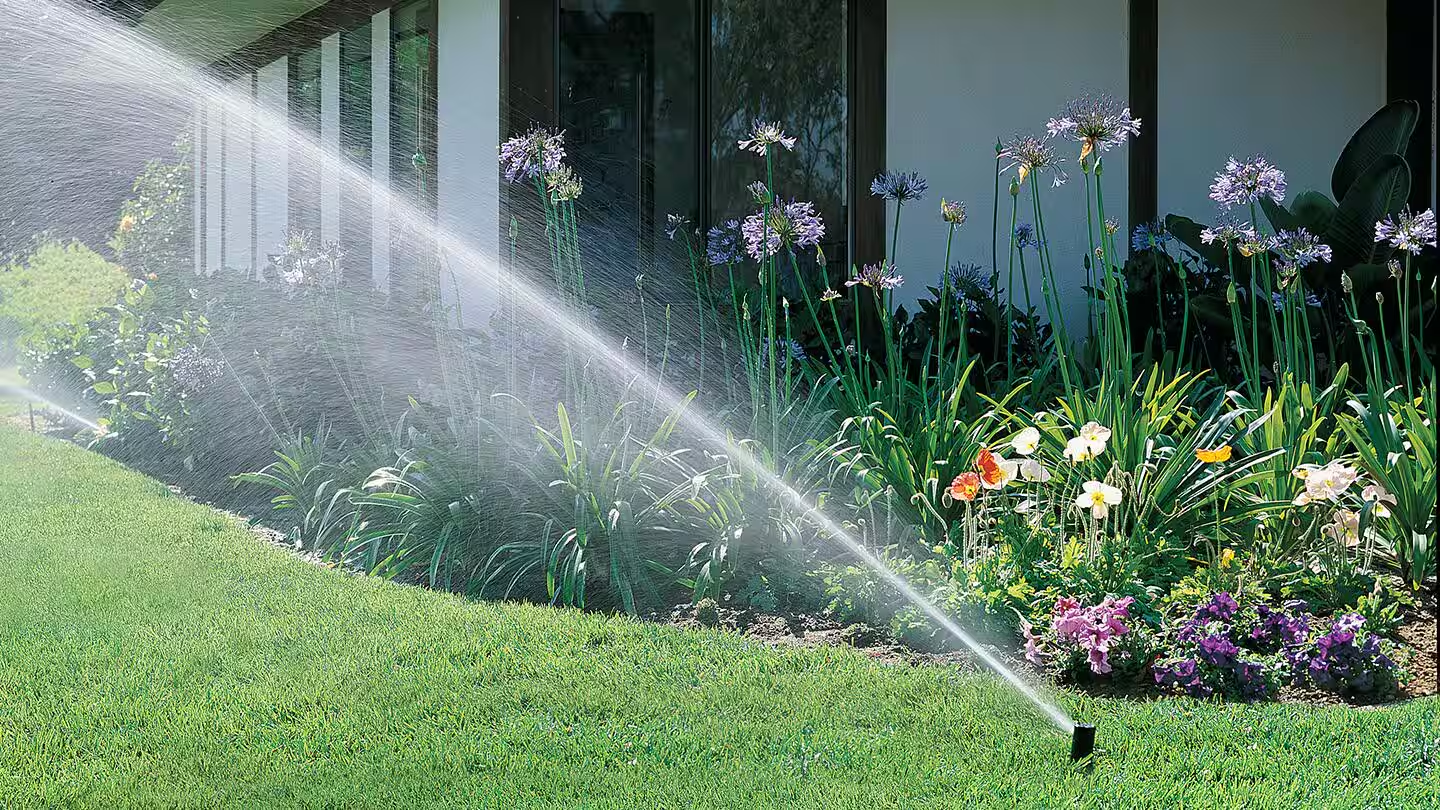
Precision watering directs moisture to root zones using drip lines and matched-precipitation nozzles, so your plants get exactly what they need while you cut waste. Smart controllers that use weather data or soil sensors can reduce outdoor water use by up to 30%, lower your bills, and help prevent problems like fungus and root rot from overwatering’ll’ll also see healthier shrubs and deeper-rooted turf when run times match soil type and plant needs.
Choosing the Right Smart Irrigation System
Select a controller that fits your site: common residential systems run 6–16 zones, while drip-heavy landscapes may need more finely tuned valves. Prioritize units that integrate local weather, are compatible with soil-moisture sensors, and offer optional flow metering for leak detection. Choose Wi‑Fi or hub-based models based on your connectivity and whether you want remote control or full integration with other smart-home gear.
Start by doing a basic irrigation audit: map zones by plant type, sun exposure, and slope, then perform a flow test (fill a 5‑gallon bucket and time it) to calculate GPM per zone. Match emitters to plant needs—drip emitters commonly run 0.5–2 GPH, spray heads about 2–4 GPM—and size valves and piping accordingly. For sites with slopes greater than 15%, use low-angle rotors or dedicated drip to avoid runoff. Consider a system with a flow sensor to detect leaks early and a soil‑moisture probe to prevent unnecessary cycles; for typical 1/4–1/2 acre yards, a 6–12 zone Wi‑Fi controller plus one or two probes covers most needs while keeping installation and maintenance simple.
Harnessing Technology for Efficient Lighting Solutions
The Advantages of Smart Landscape Lighting
Smart landscape lighting can cut your outdoor energy use by 30–70% through LEDs, scheduling, and motion-triggered operation; motion sensors alone can reduce run time by up to 60%. You gain automated scenes for entertaining, geofencing so lights follow you home, and improved nighttime security—well-placed lighting deters opportunistic theft. Strong energy savings and programmable control also boost curb appeal and property value, making smart lighting a practical upgrade for both performance and aesthetics.
Selecting Smart Lighting Components for Your Garden
Opt for high-quality LEDs (2700–3000K for warm, natural tones) and decide between 12V low-voltage systems for easy DIY runs or line-voltage for long-distance feeds; size transformers at least 20% above total wattage. Choose IP-rated fixtures (IP65+ for exposed areas, IP68 for submersibles), and pick a control protocol—Zigbee, Z-Wave, or Wi‑Fi—with a compatible hub like Philips Hue Bridge, Hubitat, or SmartThings for reliable scheduling. Faulty connectors or undersized transformers can create performance issues, so plan accordingly.
Match fixture types to purpose: path lights at 100–300 lumens, accent uplights 400–800 lumens, and flood fixtures 800–1,500 lumens for security. Bury low-voltage cable 6–8 inches, use gel-filled waterproof connectors, and protect outdoor circuits with GFCI to prevent shocks; exposed splices and poor sealing lead to corrosion, shorts, and fire risk. Be Happy Property Services recommends calculating the total fixture wattage, adding a 20% buffer, and testing scenes at night to tune beam angles and avoid glare.
Synergizing Irrigation and Lighting for Eco-Friendly Outcomes
The Interplay Between Watering Schedules and Lighting
Early-morning irrigation typically reduces evaporation losses by about 20–30% versus midday watering, so you should schedule overhead sprays before sunrise when possible. Aligning lighting runtimes with irrigation prevents water from hitting fixtures; avoid running pathway or accent lights while sprinklers are active to reduce short-circuit and slip hazards. Drip systems tolerate evening schedules better, while spray heads need dry periods after sunset to cut disease risk for turf and plants.
Maximizing Resource Efficiency with Integrated Systems
Combine soil-moisture sensors, ET-based controllers, and lighting controls to cut outdoor water use by 20–50% and lighting energy by 50–75% in many installations. You can use simple rules—delay irrigation if a rain sensor trips, dim decorative lights during low activity, and prioritize drip over sprays in beds—to realize savings. For instance, Be Happy Property Services saw a 35% water and 60% energy reduction on a 0.25-acre site after full integration.
Start by zoning irrigation by plant type and microclimate, placing at least one soil sensor per major zone to avoid overwatering. Connect controllers to a central automation hub (MQTT, Z-Wave, or BACnet integrations work well) so weather forecasts and motion sensors can suspend or adjust schedules in real time. Use sealed, IP65+ fixtures and ground-fault protection where lights are near spray to prevent electrical failures. Typical combined ROI for smart controllers plus LED retrofits runs about 2–4 years, depending on local water and energy costs—so you save both the environment and operating expense while protecting people and equipment.
Remote Control and Monitoring: Managing Your Landscape from Anywhere
Mobile Applications for Real-Time Management
Mobile apps let you open valves, run individual zones, and tweak schedules from anywhere, often supporting common residential controllers with 6–16 zones. You can view live soil moisture, local weather, and evapotranspiration data, then adjust run times by minutes or hours. Push notifications show water usage and system status, helping you cut water use by an estimated up to 30% on retrofit projects. Look for apps with Wi‑Fi and cloud sync so your settings stay consistent across devices.
Setting Alerts and Customization for Optimal Performance
Use alerts for leaks, abnormal flow, freeze warnings, and missed cycles so you can act fast. Configure thresholds, such as flow rising more than 30% above baseline or temperatures falling below 36°F, to trigger a freeze lockout. Create custom rules that pause irrigation during rain forecasts, limit run times during high wind, and escalate critical alarms to multiple contacts so you don’t get blindsided by system failures.
Digging deeper, you can combine sensor inputs and forecast data to build conditional logic: for example, stop watering if soil moisture exceeds a user-set threshold (common ranges: 20–30% volumetric water content for established turf) or skip the next cycle when 0 “25” of rain is predicted. Be Happy Property Services field retrofits typically reduced irrigation runtime by 20–35% by tuning these rules. Assign priority levels to alerts—informational, action-needed, emergency—and automate responses like shutting off a zone on a high-flow alarm or dimming landscape lighting at scheduled curfew; this layered approach keeps you proactive, minimizes water waste, and prevents damage before it becomes costly.
Environmental Impact: Smart Solutions for a Sustainable Future
Reduction in Water Waste and Energy Consumption
Smart irrigation controllers and soil-moisture sensors let you tailor watering to actual need, cutting outdoor water use by an estimated 20–50% in many installations. Weather-based schedules and leak detection stop unnecessary run times, while switching landscape lighting to LEDs and adding timers/occupancy sensors can reduce lighting energy by another 30–60%. Combining drip lines for beds and smart controllers typically returns measurable utility savings within 12–18 months on commercial and residential properties.
Enhancing Biodiversity Through Intelligent Design
Zoning irrigation for plant types and using native plant palettes encourages pollinators and beneficial insects by providing consistent nectar and nesting habitat; projects that replace high-water turf with native beds often cut irrigation needs by 40–70% and boost local pollinator activity. Choosing warm-spectrum, shielded LEDs and limiting overnight illumination reduces insect disorientation and preserves nocturnal wildlife corridors.
Practical steps you can take include grouping plants by water need, setting soil sensors to avoid overwatering (targeting root-zone moisture specific to species), and installing low-flow drip for wildflower strips and shrubs. Use lighting controls to dim to 30–50% for ambient safety levels and reserve motion-activated accents for higher brightness. Monitor changes using simple surveys or apps like iNaturalist to quantify increases in bee and bird visits, then adjust irrigation timing and light schedules seasonally to maintain habitat health while maximizing the resource savings.
Troubleshooting Common Issues with Smart Systems
Connectivity Challenges and Solutions
Dead zones often result from using 5 GHz for yard devices—2.4 GHz provides a longer range (roughly 150–300 ft outdoors), while 5 GHz offers faster speeds but drops off around 50–100 ft. Move your gateway within 30–50 ft of controllers, add a mesh extender or a dedicated Zigbee/Z‑Wave hub, change Wi‑Fi channels to reduce interference, and update firmware; power‑cycle devices before swapping hardware to rule out transient faults. Watch for signal loss near metal fences or pool pumps.
Maintenance Tips to Ensure Longevity
Inspect valves and drip filters every 3 months, clean debris screens, and flush mains in spring. Additionally, swap controller backup batteries annually—many units use AA or CR123 cells. Apply dielectric grease to exposed terminals, tighten fittings, and check for moisture in light fixtures; service any corroded contacts or persistent leaks promptly to avoid larger failures.
- Smart irrigation
- Smart lighting
- Wi‑Fi
- Zigbee
- Mesh extenders
Assume that a quick power cycle plus moving the hub 10–15 feet closer will resolve many connectivity complaints.
Be Happy Property Services recommends a short, repeatable maintenance routine: quarterly checks for solenoid resistance and valve operation, biannual cleaning of fixtures and filters, and firmware reviews every 3 months. Winterize by draining manifolds and insulating exposed valves before the first freeze. Test flow sensors monthly during the irrigation season, and log each visit so trends show early. These steps cut emergency repairs and extend component life. Address freeze damage or short circuits immediately to prevent landscape loss.
- valves
- batteries
- filters
- firmware
- seasonal winterization
Assume that scheduling two short maintenance visits per year prevents most failures and adds years to your system.
Emerging Trends in Smart Landscape Technologies
The Future of Automation in Irrigation and Lighting
Smart controllers now combine satellite and local sensor data with AI to create predictive schedules that adjust to microclimates, reducing outdoor water use by 20–50% (EPA WaterSense). You can link irrigation to utility time-of-use rates, so lighting dims during peak pricing and brightens for safety. Additionally, you can expect zoning granular enough to treat lawn, shrub, and tree areas independently for optimal plant health and resource use.
Innovative Gadgets to Watch Out For
Look for smart flow meters with auto-shut valves. These soil capacitance sensors report volumetric water content, solar-powered LED fixtures with integrated battery backups, and LiDAR or multispectral cameras that assess plant stress. You’ll find mesh lighting controllers (Zigbee/Thread), long-range LoRaWAN sensors for large properties, and consumer products promising 3–5 years of battery life for low-maintenance installs.
Flow sensors now spot sustained low-flow patterns and can shut valves before a small leak becomes a major loss; in pilot programs, continuous monitoring uncovered leaks wasting hundreds to thousands of gallons per week. You can deploy freeze and pressure sensors that automatically isolate sections to prevent burst pipes, and choose IP67-rated nodes for harsh conditions. Advanced controllers use evapotranspiration models plus local soil VWC readings to cut unnecessary cycles. At the same time, smart lighting systems combine motion, lux, and calendar-driven scenes to deliver safety with significant energy savings. Be Happy Property Services often pairs flow monitoring, zoned soil sensors, and mesh lighting in retrofits so you get both rapid payback and protection against the most damaging failures.
Setting Up Your Landscape Smart System: A Step-By-Step Guide
Quick Setup Checklist
| Component | Recommendation / Specs |
| Site Survey | Measure flow with a pressure gauge and bucket test (gpm & PSI). Note soil type (sandy, loam, clay) and sun exposure for each zone. |
| Controller & Network | Choose a Wi‑Fi or Z‑Wave controller with weather/ET support; require a reliable 2.4 GHz signal or add a mesh node. |
| Irrigation Hardware | Use 18–16 AWG for solenoid wire, “/2″–1” PVC/mainline sized to flow; set valves to 40–60 PSI operating range where possible. |
| Low‑Voltage Lighting | Install LED fixtures with a 12V transformer sized ≥ total wattage + 20% buffer; keep voltage drop <10% by using 12 AWG for long runs. |
| Trenching & Burial | Bury low‑voltage cable” ~6″ and irrigation lateral lines 6 “12”; cross mains deeper and avoid sharp bends. |
| Sensors & Controls | Add rain shutoff or soil moisture sensors at a depth of “–6” in representative beds; integrate flow sensors to detect leaks or broken heads. |
| Permits & Safety | Consult local code for anti‑siphon/backflow requirements and use a licensed electrician for any 120V/240V connections—shock risk with mains wiring. |
Initial Assessment and Design Plans
Start by mapping your property into irrigation and lighting zones, then measure actual water flow using a bucket test and pressure gauge (typical residential supply 40–60 PSI). Identify plant root zones and soil infiltration rates—sandy soils need shorter, more frequent cycles while clay requires cycle‑and‑soak scheduling. Mark transformer/controller locations within 10–25 feet of power and choose sensor sites that represent the driest and shadiest parts of the landscape for accurate ET adjustments.
Installation Process and Best Practices
Begin with a dry run: wire controllers and lay out valves above ground, then test each zone with the designed heads or drip emitters. Use waterproof connectors for splices, trench cables “6” for low voltage, and size runs with 12 AWG when distances exceed 50 feet to reduce voltage drop. Incorporate a flow sensor per mainline and set controllers to local ET or WeatherSense profiles to achieve up to 30% water savings compared to manual timers.
For irrigation, install mainline first, then place drip tubing 6″ to 12″ from plant crowns—use one 0.5–1.0 gpm emitter per “12” of root spread for shrubs and 2–4 emitters around trees spaced at the root flare. Conduct a catch‑can precipitation test to set run times: spray heads often run 8–20 minutes per cycle, rotors 15–45 minutes depending on precip rate; implement 2–3 short cycles with 20–40 minute soak intervals on clay soils. For lighting, position path lights 8–12 feet apart and accent fixtures 10–30 feet from focal points, verify transformer capacity with an added 20% buffer, and always have the transformer on a GFCI circuit. Final commissioning should include leak/flow alarms, a full schedule test, and mobile app integration so you can fine‑tune runtimes based on actual seasonal ET data.
To wrap up
Now you can transform your landscape with smart irrigation and lighting by zoning plants, using soil-moisture sensors and weather-based controllers, and scheduling watering for early morning to reduce evaporation. Pair low-voltage, motion, and timed lighting to enhance safety and curb appeal while minimizing energy use. Monitor and adjust remotely through your smart hub, and engage Be Happy Property Services for professional setup, seasonal tuning, and reliable long-term performance.
FAQ
Q: How do smart irrigation systems work, and how will they help my landscape and water bills?
A: Smart irrigation systems use a central controller or app that adjusts watering based on data from sensors and weather forecasts. Key components include the controller, zone valves, soil moisture or rain sensors, and often a flow sensor to detect leaks. The system groups plants into zones by water needs (lawn, shrub beds, drip lines) and applies the right volume and duration for each. Weather-based controllers use local forecast and evapotranspiration (ET) data to reduce unnecessary cycles when it’s cool or rainy, while soil-moisture sensors measure actual conditions before starting a run. That targeted scheduling reduces runoff and overwatering, which lowers water use and can extend plant health. Be Happy Property Services can assess your property, map efficient zones, install the right sensors, and program schedules tailored to your plant palette and local regulations to maximize savings and plant vigor.
Q: What are the best practices for setting up smart landscape lighting for appearance and safety?
A: Start with a lighting plan: define goals (path safety, accenting trees, highlighting architecture) and create layers—path/step lighting for safety, accent/uplights for focal points, and downlights or wall washes for general ambiance. Choose low-voltage LED fixtures for efficiency, long life, and lower heat. Pick a color temperature around 2700–3000K for warm, natural tones. Use shields and directional fixtures to avoid glare and light trespass, and place lights low for subtle accents or higher for broad washes. Integrate motion sensors on service areas for security and use dimmers or scenes to adapt lighting for different occasions. Connect lighting to a smart controller or hub to set schedules, enable geofencing, or control manually from your phone. Be Happy Property Services can design a layout that balances beauty and safety, handle safe low-voltage wiring or transformer placement, and program smart scenes that match your lifestyle.
Q: What maintenance and troubleshooting should I plan for, and when should I call Be Happy Property Services?
A: Carry out seasonal checks: spring startup to test zones and replace worn nozzles, summer inspections for clogs or broken heads, and fall winterization in freeze areas (blowout or drain lines). Regular tasks include cleaning filters, clearing debris from emitters, checking sensor alignment, updating controller firmware, and testing battery-backed clocks. Watch for signs of trouble: uneven coverage, soggy spots, unexpected spikes in water usage (possible leaks), controller errors, or flickering/failed lights. For lighting, inspect connections, transformer output, and fixture seals. If you encounter electrical faults, persistent low pressure, repeated controller alarms, hidden leaks, or require complex rewiring or permit-related work, contact Be Happy Property Services. We offer diagnostic visits, flow-sensor installation for leak detection, professional winterization, and retrofit services to integrate new smart controllers and lighting with existing systems. Hence, your landscape runs reliably and efficiently.

Jacob Bishop is the founder and CEO of Be Happy Property Services. With a strong background in property management and customer service, Jacob has dedicated himself to creating a company that prioritizes client satisfaction and seamless property experiences. His extensive knowledge and hands-on approach have earned him a reputation for excellence in the industry. Jacob’s passion for real estate and commitment to happy living spaces make him a trusted leader in property services.