A well-built paver patio can turn an Anchorage backyard into a more useful, comfortable, and attractive outdoor space.
It can create a place for grilling, seating, family time, fire pit evenings, container gardens, or a quiet spot to enjoy the warmer months.
But planning a paver patio in Anchorage is different from planning one in a mild climate.
The ground moves. Snow piles up. Water needs somewhere to go. Freeze-thaw cycles can test the strength of the base. If the patio is not planned correctly, pavers may settle, shift, dip, or collect standing water.
That is why cost and design should be considered together.
A low-cost patio that ignores drainage, base depth, access, and winter conditions can become more expensive later. A smart patio plan focuses on long-term performance, not just the first-year appearance.
For Anchorage homeowners, the goal is simple: build a patio that looks good, withstands local weather, and supports how the backyard is actually used.
Why a Paver Patio Works Well for Anchorage Backyards
A paver patio is a flexible choice for many Anchorage homes.
Unlike one large poured surface, pavers are individual units installed over a prepared base. This gives homeowners many options for shape, pattern, border style, color, and layout.
Pavers can work well for small seating areas, large entertainment patios, walkways, side-yard paths, fire pit zones, and backyard transitions.
They also fit nicely with other outdoor improvements.
Be Happy Property Services provides hardscaping services in Anchorage, including pavers, retaining walls, driveways, and other outdoor upgrades designed for local conditions. That local fit matters.
A patio in Anchorage needs to handle more than foot traffic. It needs to manage moisture, seasonal changes, and the way snow affects the yard.
Pavers are also useful because repairs can be more targeted. If one area settles, individual pavers can often be lifted and reset rather than replacing the entire patio.
This makes pavers a strong option for homeowners who want both style and practicality.
What Impacts the Cost of a Paver Patio in Anchorage?
The cost of a paver patio in Anchorage depends on several project details.
The biggest factor is size. A small patio for two chairs and a grill will cost less than a large backyard entertaining area with seating walls, steps, borders, and lighting.
The second major factor is site preparation.
Some backyards are already fairly level and easy to access. Others need grading, excavation, drainage corrections, or soil removal before patio installation can begin.
Access can also affect cost.
If materials and equipment can be easily brought to the backyard, the project may be simpler. If the crew must work through a narrow side yard, around fences, over slopes, or near tight landscaping, labor may increase.
The paver style also matters.
Simple concrete pavers are usually more budget-friendly than premium shapes, textured surfaces, mixed colors, or specialty borders.
Base preparation is another key cost factor.
In Anchorage, cutting corners on the base is risky. A patio that is not built on a strong, well-draining foundation may look fine at first, but shift after freeze-thaw cycles.
Drainage is also part of the cost conversation.
If water currently collects in the yard, near the home, or where the patio will be installed, the project may require grading or drainage improvements before pavers are installed.
That upfront work can protect the patio from future sinking, shifting, and uneven areas.
Why the Base Matters More Than Many Homeowners Realize
The surface pavers are what everyone sees.
The base is what makes the patio last.
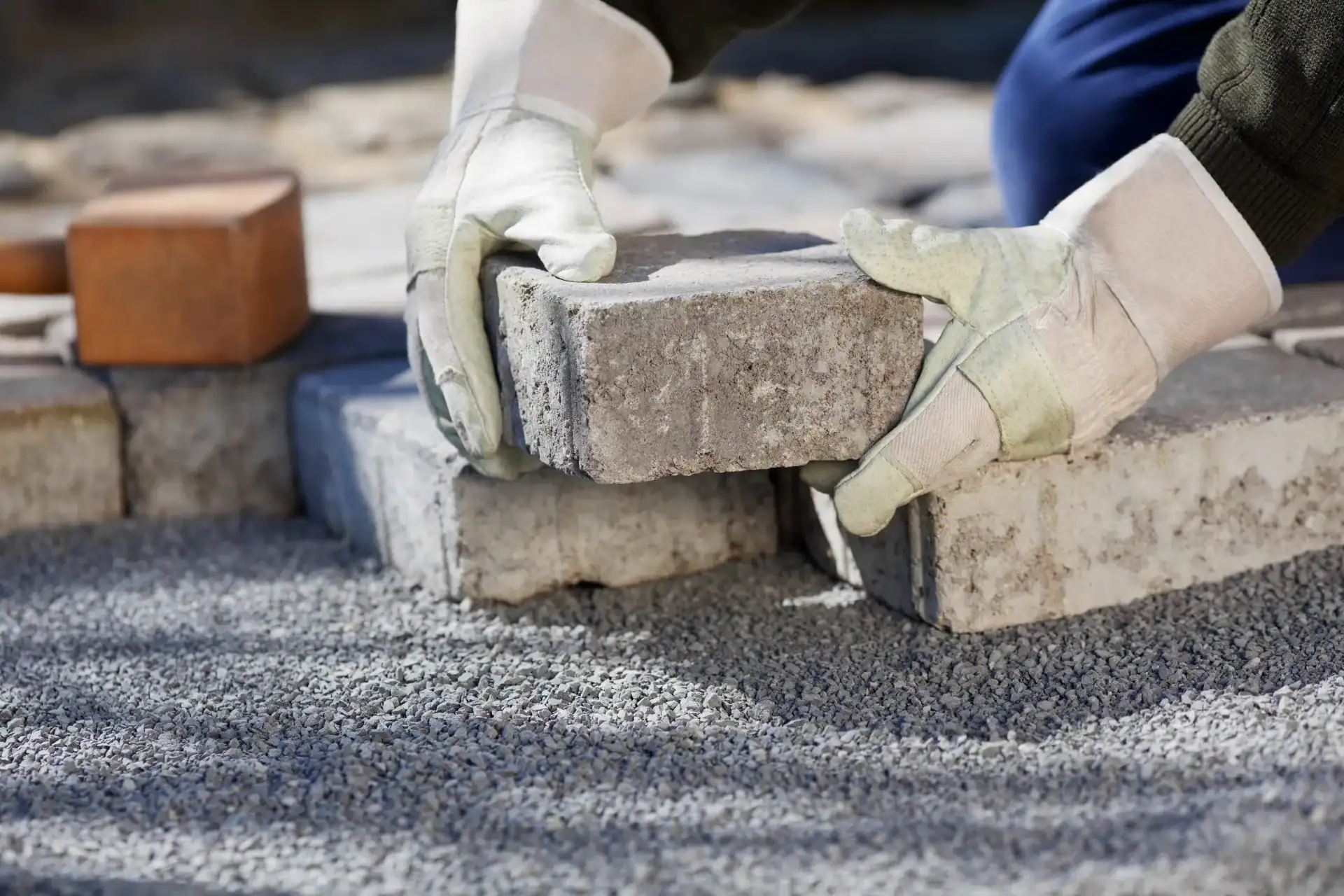
For a paver patio in Anchorage, the base is one of the most important parts of the project. It supports the pavers, helps water move properly, and reduces the chance of major movement during seasonal changes.
A weak base can lead to low spots, raised edges, rocking pavers, puddles, and uneven walking surfaces.
A strong base starts with proper excavation.
The area must be dug out to make room for the base layers, bedding material, and pavers. The exact depth depends on the project, soil conditions, and intended use.
Compaction is also essential.
If the base is not compacted correctly, it can settle after installation. That settling can create dips and uneven areas.
Drainage should be considered before installation begins.
Be Happy Property Services explains that drainage mistakes can lead to sinking, shifting, and cracks in Anchorage hardscaping projects.
That point is especially important for patios.
Water should not sit under or around the patio. It should move away in a controlled way. If the patio traps water, the base can weaken, and freeze-thaw movement may become more noticeable.
A patio is only as reliable as the ground beneath it.
Budget-Friendly Paver Patio Ideas
A paver patio does not have to be oversized to be useful.
For many Anchorage backyards, a smaller, well-designed patio is the smarter choice.
One budget-friendly idea is a simple square or rectangular patio near the back door. This shape usually keeps cuts and layout complexity lower.
It can create enough room for a grill, a small table, or a couple of chairs without requiring a major backyard overhaul.
Another cost-conscious idea is a compact patio fire pit.
Instead of paving a large area, homeowners can create a defined circular or square zone with enough space for seating.
A simple paver walkway can also be added later if the budget allows.
Borders are another place to control costs.
A basic border can give the patio a clean finished look without making the design too complex.
Homeowners can also keep costs down by avoiding excessive levels, steps, curves, and built-in features.
Simple does not mean plain.
A clean paver pattern, neat edges, and smart placement can make even a small patio feel intentional and attractive.
Mid-Range Paver Patio Ideas for More Function
A mid-range patio gives homeowners more room to use the backyard in different ways.
This might include a dining area, grill space, lounge chairs, and a clear connection to a walkway or garden path.
For Anchorage homes, mid-range designs often work best when the patio is planned around real daily use.
Think about where the sun hits the yard. Think about wind exposure. Think about how people move from the house to the patio.
A mid-range patio may include a border in a contrasting color.
It may also use a more interesting paver pattern, such as a running bond, basketweave, or modular pattern.
Another smart idea is to create zones.
One section can be used for outdoor dining, while another, a smaller area, can hold a fire pit or seating.
This gives the backyard more structure without making it feel crowded.
A walkway can also connect the patio to a gate, garage, shed, garden, or side yard.
This is especially useful in Anchorage, where muddy or wet areas can make backyard movement less comfortable during certain seasons.
A well-placed paver walkway can protect the lawn and make the whole yard feel more finished.
Higher-End Paver Patio Ideas for a Finished Outdoor Living Space
Some homeowners want a patio that feels more like an outdoor room.
A higher-end paver patio in Anchorage may include multiple seating areas, retaining walls, built-in steps, raised planting beds, lighting, or a dedicated fire feature area.
This type of patio usually requires more planning.
Grade changes, drainage, access, materials, and layout all need careful attention.
Retaining walls can help make sloped backyards more usable.
A yard that feels uneven or difficult to furnish may become much more practical when a level paver patio is paired with a wall or step system.
Be Happy Property Services offers residential and commercial hardscaping solutions in Anchorage, including pavers and retaining walls.
This kind of pairing can make a major difference in backyards that need both structure and usable space.
Higher-end patios may also include wider borders, mixed paver sizes, or more decorative patterns.
The cost is higher, but the result can feel more custom and connected to the home.
For homeowners who spend a lot of time outside during Anchorage’s warmer months, this investment can make the backyard more enjoyable and easier to use.
Paver Patio Shapes That Work Well in Anchorage
The shape of the patio affects cost, appearance, and function.
Rectangular patios are often the most practical.
They work well for dining sets, grills, outdoor sofas, and simple furniture layouts. They also tend to be more efficient to install than complex curved shapes.
Square patios are good for compact spaces.
They can work well in smaller backyards or side yards where the goal is to create a simple seating area.
Curved patios can feel more natural.
They work nicely with landscaping, garden beds, trees, and informal backyard designs. However, curves may require more cutting and labor.
L-shaped patios are useful when they wrap around part of the home or connect two outdoor areas.
They can also help separate a grill area from a seating area.
For Anchorage backyards, function should guide shape.
A patio should allow enough room for furniture, a safe walking space, and easy movement from the house.
It should also account for snow storage and drainage.
A beautiful patio shape will not feel successful if it creates awkward winter maintenance or water problems.
Choosing the Right Paver Style
Paver style should match the home, yard, and budget.
Concrete pavers are a common choice because they come in many shapes, sizes, and colors.
Some homeowners prefer a clean, modern look with large-format pavers and simple lines.
Others prefer a more natural look with textured pavers and blended colors.
For Anchorage homes, color choice is important.
Very light pavers may show dirt more easily. Very dark pavers may create a stronger contrast and can feel bold in smaller yards.
Neutral tones often work well because they pair nicely with siding, decks, fences, lawns, and planting beds.
Borders can help define the patio.
A darker or contrasting border can make the patio look more finished. It can also visually separate the patio from lawn or gravel areas.
Pattern choice also affects the final look.
Simple patterns feel clean and calm. Mixed-size patterns can feel more custom and active.
The best paver style is one that fits the home without overwhelming the yard.
A patio should improve the space, not fight with it.
Drainage Planning for a Paver Patio in Anchorage
Drainage is one of the most important parts of patio planning.
A patio should not send water toward the house.
It should not create puddles near doors, steps, or walkways.
It should not trap water in the base.
Anchorage properties can face drainage challenges because of snowmelt, rain, soil conditions, and seasonal thaw.
If water has nowhere to go, the patio can shift or settle over time.
A proper slope helps guide water away.
The surrounding yard should also be considered. A patio may be built correctly, but if the yard drains toward it, problems can still happen.
Downspouts matter too.
If roof water is directed toward the patio, that water may collect around the base. Downspout extensions or drainage adjustments may be needed.
This is why patio planning should start with the entire backyard, not only the paver area.
Look at where water currently moves.
Look at where it collects.
Look at where snow is stored in winter.
A durable paver patio in Anchorage starts with water control.
How Snow and Winter Use Affect Patio Design
Many patios are planned for the warmer months, but Anchorage homeowners should also consider winter.
Where will snow go?
Will snow be shoveled across the patio?
Will a gate, walkway, or back door need to stay clear?
Will patio furniture be stored or left outside?
These questions can affect the layout.
A patio close to the back door may need a clear winter path. A patio farther into the yard may need a walkway that remains usable during seasonal changes.
Edges should also be considered.
If snow is pushed across the patio, raised edges or awkward transitions can become a hassle.
A smooth transition from the door to the patio may be useful, but it must still be designed with drainage in mind.
Furniture placement is another consideration.
Large built-in features may look great in summer, but they can make snow clearing harder in winter.
A smart patio design supports all seasons.
It does not need to be used every day in winter, but it should not create unnecessary maintenance problems.
Small Backyard Paver Patio Ideas
Small Anchorage backyards can still benefit from a paver patio.
The key is to avoid overbuilding.
A compact patio can make the yard feel more organized and usable without taking up too much lawn or garden space.
One idea is a small bistro patio.
This works well for morning coffee, reading, or two-person seating.
Another idea is a grill pad with a short walkway.
This keeps the grill on a stable surface and helps reduce wear on the lawn.
A corner patio can also be useful.
If the center of the yard needs to stay open for pets, kids, or lawn space, a corner patio can create a seating area without taking over the whole backyard.
Built-in edges can make a small patio feel more defined.
A clean border, nearby planting bed, or simple path can help the space feel complete.
For small yards, furniture size matters.
Oversized furniture can make even a well-built patio feel cramped. Choose pieces that fit the scale of the space.
Large Backyard Paver Patio Ideas
A larger backyard gives more design freedom.
Homeowners can create multiple outdoor zones, such as cooking, dining, relaxing, and gathering around a fire feature.
The patio does not have to be a single large slab.
Breaking it into sections can make the design feel more natural.
A large paver patio may include a main dining area near the house and a separate seating area farther into the yard.
A walkway can connect the two.
Another option is a patio with a central fire feature.
This creates a strong focal point and gives people a reason to gather outside.
Large patios should include enough open space for movement.
Furniture, grills, planters, and seating should not block walking paths.
Drainage becomes even more important with larger patios.
The larger the surface area, the more planning is needed to move water effectively.
A large paver patio in Anchorage should feel useful, balanced, and built for the yard’s natural layout.
Common Cost Mistakes to Avoid
One common mistake is focusing only on the visible pavers.
The base, drainage, and site preparation are just as important.
Another mistake is choosing the cheapest layout without thinking about long-term performance.
A patio that settles or holds water may require repairs sooner than expected.
Homeowners may also forget about access.
If the backyard is hard to reach, the project can require more labor. It is better to know that before planning the final budget.
Another mistake is making the patio too small.
A patio should be sized for furniture and movement. A space that looks large when empty can feel tight once chairs, a grill, and a table are added.
On the other hand, making the patio too large can also increase cost without adding real value.
The best size is the size that supports how the space will be used.
Finally, do not ignore winter.
Snow storage, clearing paths, and freeze-thaw conditions should influence the plan.
A patio designed only for summer may create problems during the rest of the year.
How to Plan Your Paver Patio Budget
Start with the purpose.
Is the patio for grilling, dining, relaxing, entertaining, or all of these?
Next, measure the rough area.
You do not need final dimensions right away, but knowing whether the project is small, medium, or large helps guide expectations.
Then think about the site.
Is the area flat or sloped?
Does water collect there?
Is there easy access?
Are there existing features that need to be removed?
After that, think about design.
A simple patio will usually cost less than one with curves, steps, retaining walls, premium pavers, and detailed borders.
It is also wise to budget for the less visible parts of the project.
Excavation, base material, compaction, drainage, and edge restraint all affect performance.
Be Happy Property Services provides outdoor services in Anchorage and understands the importance of durable solutions for Alaska’s demanding environment.
That local experience is valuable when planning a patio that must handle real weather, not just look good in photos.
When a Paver Patio Is Worth the Investment
A paver patio is worth considering when the backyard needs a more stable, useful surface.
If the lawn gets muddy, furniture sinks into the grass, or the yard feels unfinished, a patio can solve several problems at once.
It can create a defined place for outdoor living.
It can improve the yard’s appearance.
It can connect the home to the landscape.
It can also make entertaining easier during the warmer months.
For Anchorage homeowners, the value comes from building it correctly.
A patio with poor drainage or inadequate base preparation can be frustrating. A patio with thoughtful planning can improve daily use and reduce future issues.
The right paver patio does not have to be the biggest or most expensive.
It has to be the right size, in the right location, with the right base and drainage.
That is what makes the difference.
A paver patio in Anchorage should be planned with beauty, functionality, and local weather in mind.
Cost depends on size, access, paver style, base preparation, drainage needs, and design details.
A simple patio can create a practical seating or grilling space. A mid-range design can support dining, paths, and backyard zones. A higher-end patio can become a full outdoor living area with walls, steps, and custom features.
No matter the size, the foundation matters.
Drainage matters.
Winter use matters.
The best patio is one that fits the home, supports the way the backyard is used, and stands up to Anchorage conditions over time.
With smart planning and proper installation, a paver patio can become one of the most useful outdoor upgrades for an Anchorage backyard.
FAQs
How much does a paver patio in Anchorage cost?
The cost depends on the patio size, paver type, site access, excavation needs, base preparation, drainage work, and design details. A simple patio usually costs less than a larger custom patio with steps, walls, borders, or multiple outdoor zones.
Are pavers a good choice for Anchorage weather?
Yes, pavers can be a good choice for Anchorage weather when the patio is installed over a strong base with proper drainage. The base and water control are especially important because freeze-thaw cycles can affect outdoor surfaces.
What is the best size for a backyard paver patio?
The best size depends on how the space will be used. A small patio may work for two chairs and a grill, while a larger patio may be needed for dining, entertaining, or a fire feature. The patio should allow enough room for furniture and a comfortable walking space.
Why is drainage important for a paver patio?
Drainage helps prevent water from collecting under or around the patio. Poor drainage can lead to sinking, shifting, and uneven areas, as well as long-term performance problems, especially in Anchorage’s seasonal conditions.
Can a paver patio be added to a small backyard?
Yes, a small backyard can still have a useful paver patio. A compact seating area, grill pad, corner patio, or short walkway can improve the space without taking over the entire yard.

Jacob Bishop is the founder and CEO of Be Happy Property Services. With a strong background in property management and customer service, Jacob has dedicated himself to creating a company that prioritizes client satisfaction and seamless property experiences. His extensive knowledge and hands-on approach have earned him a reputation for excellence in the industry. Jacob’s passion for real estate and commitment to happy living spaces make him a trusted leader in property services.