
Spring in Anchorage can feel like a fresh start, but it can also leave your yard looking rough.
Once the snow melts, the property often tells the story of winter. Leaves are packed into corners. Gravel may be scattered across the lawn. Branches may be down. Beds may look flattened. Grass may be matted. Walkways may need attention. Drainage problems may suddenly become easier to see.
That is why spring yard cleanup in Anchorage is such an important seasonal task.
It is not only about making the property look better. It is about helping the yard recover from winter, preparing the lawn for healthy growth, checking for damage, and setting up the outdoor space for the warmer months ahead.
The weeks after breakup season are the right time to slow down, walk the property, and address any issues that snow may have hidden.
A good spring cleanup gives your lawn, beds, trees, shrubs, and outdoor features a cleaner start. It also helps you spot small problems before they turn into bigger ones.
Be Happy Property Services offers lawn care and landscaping services in Anchorage, with seasonal maintenance support for lawns, trees, beds, and outdoor spaces. Their lawn care service page notes that Alaska’s climate creates seasonal challenges, including summer growth, fall leaf management, and winter protection.
Why Post-Breakup Yard Cleanup Matters in Anchorage
Breakup season can be messy.
Snow melts at different speeds across the yard. Shaded areas may stay wet longer. Low spots may collect water. Driveway edges may hold gravel and debris. Beds may be covered with soggy leaves or branches.
If this mess is left alone, it can slow spring recovery.
Matted leaves can block sunlight from reaching the grass. Wet debris can hold moisture against plants. Gravel can damage mower blades later in the season. Broken branches can make the yard look neglected and create safety concerns.
Spring cleanup also gives homeowners a chance to inspect the property before regular lawn care begins.
You can see where water is pooling.
You can check if the edging shifted.
You can look for damaged shrubs.
You can find lawn areas that may need seeding.
You can identify places where snow storage, ice, or runoff caused problems.
For Anchorage homeowners, spring yard cleanup is not a one-step chore. It is a reset for the whole property.
Start with a Full Property Walkthrough
Before raking, hauling, trimming, or washing anything, walk the property.
Start at the front curb and move slowly around the yard. Look at the lawn, beds, trees, shrubs, driveway, walkways, fencing, patio areas, and drainage paths.
Take notes as you go.
This helps you avoid jumping into one task while missing bigger issues elsewhere.
Look for branches, trash, leaves, gravel, pet waste, compacted snow piles, standing water, damaged edging, exposed roots, sunken spots, and areas where grass looks weak.
Also, check areas where snow was piled during the winter.
These spots often need extra attention because they may contain gravel, salt residue, broken twigs, and compacted debris.
A walkthrough helps you build a smart cleanup order.
For example, it does not make sense to clean the lawn perfectly before removing broken branches from trees above it. It also does not help to refresh planting beds before clearing runoff paths, which may send water back into them.
Start with inspection. Then work from large debris to detail work.
Remove Winter Debris First
The first active step in spring yard cleanup in Anchorage is removing debris.
Winter can leave behind branches, leaves, trash, dead plant material, gravel, and other items that were hidden under snow. These should be cleared before lawn work begins.
Start with the largest debris.
Pick up fallen branches, sticks, and any items that could damage equipment or create tripping hazards.
Then move to leaves and packed organic matter.
Leaves that sat under snow can become wet and heavy. If they are left on the lawn, they can smother grass and slow spring growth.
Clear debris from corners, fence lines, around steps, under shrubs, near downspouts, and along walkways.
These areas often collect more material than open lawn spaces.
Also check window wells, basement entry areas, and around exterior doors. Debris in these spots can trap moisture and make the home’s exterior look poorly maintained.
A clean surface makes every next step easier.
Rake the Lawn Gently
After snowmelt, the lawn may still be soft.
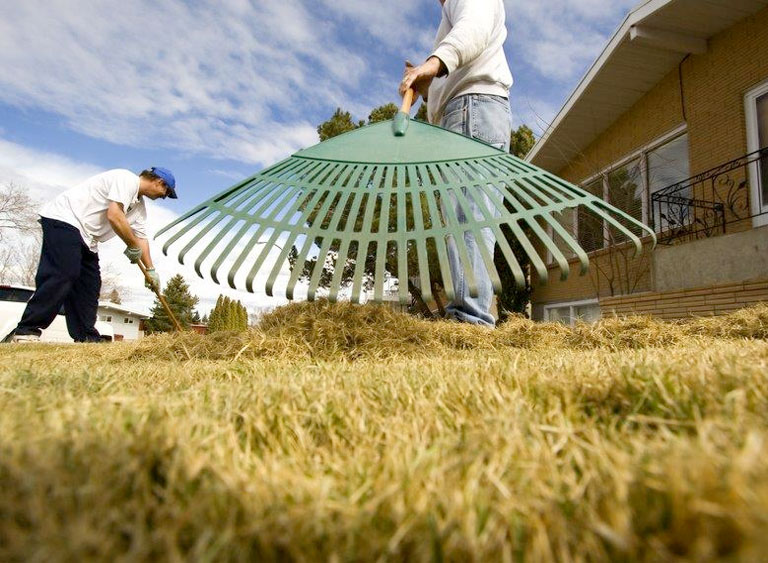
Raking too aggressively while the ground is wet can damage grass roots and pull up healthy turf. The goal is to lift matted grass and remove debris without tearing up the lawn.
Use a light touch at first.
Wait until the lawn is firm enough to walk on without leaving deep footprints. If the soil is still too soft, give it more time.
Once conditions are right, rake away leaves, dead grass, twigs, gravel, and winter buildup.
Pay close attention to areas where snow sat the longest. These sections may be flattened or discolored.
Light raking can help air and sunlight reach the grass again. It can also reveal bare patches that may need reseeding later in spring.
Be Happy Property Services’ lawn care page describes lawn maintenance services in Anchorage, including grass care, fertilization, weed control, seasonal treatments, seed application, and lawn restoration support, such as aeration, overseeding, and dethatching.
That matters because spring cleanup is often the first step before deeper lawn care work.
Clear Gravel from Lawn Edges
Gravel is one of the most common post-winter cleanup problems in Anchorage.
Snow plowing, shoveling, road treatment, and driveway use can push gravel into lawn edges and planting beds. Once the snow melts, those small stones are often scattered across the grass near driveways, sidewalks, and parking areas.
This should be cleaned up before mowing season.
Gravel left in the lawn can damage mower blades, create safety concerns, and make the yard look messy.
Use a rake, broom, shovel, or blower, depending on the surface and amount of material.
Be careful near soft turf. If the ground is still wet, aggressive scraping can tear the lawn.
Driveway edges may need more than one pass. Gravel can settle into the grass and become easier to see after the lawn begins to dry.
Also, check around curb lines and street-facing areas.
These sections often collect the most winter debris and can affect curb appeal.
Check for Standing Water and Drainage Trouble
Spring is one of the best times to spot drainage issues.
As snow melts, water movement becomes visible. You may see puddles near the house, soggy patches on the lawn, water running across walkways, or beds that stay wet longer than they should.
Do not ignore these signs.
Standing water can weaken turf, stress plants, and create muddy areas that are hard to use. If water sits near the home, it may also indicate grading or downspout issues.
Walk the property after snowmelt and again after rain.
Look for low spots.
Watch where downspouts discharge.
Check whether water is moving away from the home or back toward it.
Look at patios, walkways, and hardscape areas to see if water is collecting along edges.
Drainage issues are easier to correct when they are noticed early. Sometimes the solution may be simple, such as clearing a blocked path or extending a downspout. Other times, the yard may need grading or landscape adjustments.
A spring cleanup is not complete if water problems are left unnoticed.
Clean Up Planting Beds
Planting beds often need careful attention after winter.
Leaves, old stems, broken branches, and windblown debris can collect around plants and shrubs. Once the snow melts, these beds may look flat, messy, or waterlogged.
Start by removing loose debris.
Cut back dead annuals or old plant material left over from winter. Remove broken stems and branches from shrubs.
Be careful around new growth.
Some perennials may begin emerging slowly, and aggressive raking can damage them. Use hand tools in tighter areas where plants are close together.
Check mulch as well.
Mulch may have shifted, compacted, or washed away. Some areas may need to be refreshed later in spring after the soil warms and cleanup is complete.
Also, inspect bed edges.
Winter movement, snow removal, and thawing can blur the line between lawn and planting areas. Recutting or cleaning up edges can make the whole yard look sharper.
Be Happy Property Services provides landscaping services in Anchorage, describing outdoor spaces as a blend of beauty and function, including flower beds, hardscape, and landscape maintenance.
That balance is important during spring cleanup. Beds should look clean, but they should also be prepared for healthy seasonal growth.
Inspect Trees and Shrubs for Winter Damage
Snow, ice, wind, and cold can be hard on trees and shrubs.
Spring cleanup is the right time to check for broken branches, split stems, bent shrubs, and winter burn.
Start with anything obvious.
Remove small broken branches that have already fallen. Look for branches still hanging in trees or shrubs. If a branch is large, high, or risky to remove, it is better to have the right help rather than pull or cut it carelessly.
For shrubs, check for bent or broken sections.
Some shrubs may recover once the snow load is gone. Others may need pruning to remove damaged parts.
Avoid heavy pruning without understanding the plant type.
Some shrubs bloom on old wood, and excessive cutting at the wrong time can reduce flowering. A light cleanup of dead, broken, or unsafe growth is usually the best first step.
Also, look for plants that were damaged by piled snow near driveways or walkways.
These areas often take the most winter stress.
Tree and shrub cleanup improves appearance and supports safety and plant health.
Give Walkways, Patios, and Driveways Attention
A clean yard can still look unfinished if hard surfaces are messy.
Spring is a good time to sweep walkways, patios, steps, and driveways. Remove gravel, leaves, dirt, and winter residue.
Start with dry sweeping if the surfaces are ready.
For stubborn dirt, a rinse may help once temperatures allow.
Check for cracks, movement, low spots, or uneven edges. Freeze-thaw cycles can affect hard surfaces, and spring is when those issues become more apparent.
Patios may need extra attention around edges where leaves and debris collect.
Walkways should be checked for tripping hazards.
Steps should be cleared of dirt and inspected for safety.
Driveways may need cleanup along the sides where plowed snow left gravel or debris.
This part of the checklist improves curb appeal quickly.
It also makes outdoor areas safer and easier to use as the weather improves.
Refresh the Lawn After Cleanup
Once the debris is gone and the lawn is lightly raked, you can better judge what the grass needs.
Some areas may come back on their own as temperatures rise.
Other areas may need seeding, aeration, fertilization, or weed control.
Look for bare patches, thinning grass, compacted areas, and spots damaged by winter activity.
High-traffic areas near doors, paths, and driveways may need extra care.
If the lawn has heavy thatch or compacted soil, it may need more than basic cleanup.
Be Happy Property Services notes that lawn restoration services in Anchorage can include aeration, overseeding, and dethatching to help bring back a healthier lawn.
Spring is also a good time to think about future maintenance.
A lawn that looks weak after winter may need a better care plan through the growing season. Regular mowing, watering, weed control, and seasonal care can make the yard easier to maintain.
Spring cleanup sets the stage, but ongoing lawn care keeps the property looking good.
Re-Edge Beds and Lawn Borders
Clean edges can make a yard look much more polished.
After winter, bed lines may look uneven. Lawn edges near driveways and walkways may be messy. Mulch may have spilled into the grass, and grass may have crept into beds.
Re-edging helps restore structure.
It creates a clear separation between lawn, beds, walkways, patios, and other features.
This is especially helpful in front yards where curb appeal matters.
A clean edge can make even simple planting beds look more cared for.
Use edging tools carefully when the soil is workable but not too wet. If the ground is too soft, edges can collapse or become muddy.
After edging, remove loose soil, grass clumps, and debris.
This detail work may seem small, but it gives the yard a finished look after the heavier cleanup tasks are done.
Prepare Garden and Landscape Areas for New Growth
Once the beds are clean, start thinking about the growing season.
Check which plants survived the winter well.
Look for open spaces where new plants may be added.
Consider whether any shrubs need shaping or replacement.
Look at sun exposure now that snow is gone and before leaves fill in.
Spring is a good time to plan, but not every planting task needs to happen immediately. Some beds may need time to dry out. Some plants may need more time to show whether they are alive and healthy.
Avoid rushing into major changes before the yard has fully awakened.
Instead, use cleanup as a planning tool.
You may notice that one bed needs more structure. Another may need mulch. A walkway edge may need better planting. A shady corner may need a different design.
Be Happy Property Services’ landscaping page describes landscape work, including outdoor design, flower beds, and functional outdoor spaces for Anchorage properties.
A spring cleanup can help you decide what improvements make sense for the season ahead.
Clean Around Fences, Sheds, and Outdoor Features
Fence lines and structures collect debris over winter.
Leaves, branches, wrappers, gravel, and plant material can pile up against fences, sheds, decks, and other outdoor features.
These areas are easy to miss because they are often along the edges of the property.
Clear debris away from fences so the yard looks clean and airflow improves.
Check for loose boards, leaning sections, or winter damage.
Around sheds, remove wet leaves and debris from the base. This helps reduce trapped moisture and keeps the area looking well-maintained.
If you have raised beds, outdoor storage boxes, benches, or fire pit areas, clean around them too.
A post-breakup cleanup should include the whole property, not only the lawn.
These edge areas often make the difference between a yard that looks partly cleaned and one that looks truly ready for spring.
Look for Pest and Pet Waste Issues
Once the snow melts, pet waste and pest activity can become visible.
Pet waste should be removed before lawn growth begins. Leaving it on the grass can cause odors, damage the turf, and make the yard unpleasant to use.
Wear gloves and use proper cleanup tools.
Check common pet areas, fence lines, and places where snow was piled.
Also look for signs of pest activity, such as tunnels, chewed plants, holes, or disturbed soil.
Some lawn damage may become more noticeable after snowmelt. Identifying it early helps you decide whether the area needs repair, reseeding, or monitoring.
This step may not be the most enjoyable, but it is one of the most important parts of spring yard cleanup in Anchorage.
A clean, safe yard is easier to enjoy and easier to maintain.
Check Outdoor Lighting, Irrigation, and Fixtures
Spring cleanup is also a good time to check outdoor fixtures.
Look at landscape lighting, hose bibs, irrigation components, downspout extensions, railings, gates, and outdoor outlets.
Winter may loosen, shift, or damage parts of the property.
Landscape lights may be tilted or covered by debris.
Downspout extensions may be disconnected or blocked.
Gates may drag if posts are shifted.
Hose bibs should be checked before regular outdoor use.
If anything looks damaged, make a repair list.
Small fixes are easier to handle early in the season, before the yard becomes busier and regular mowing begins.
This step also helps prevent inconvenience later.
A broken gate, clogged drain path, or damaged fixture can become more frustrating once outdoor activity increases.
Plan Mulch Refreshing at the Right Time
Mulch can make planting beds look clean and help protect soil, but timing matters.
Do not rush to pile fresh mulch over wet, messy beds before cleanup is finished.
First, remove debris.
Then check plant health.
Then edge the beds.
Then allow the soil to dry if needed.
After that, mulch can be refreshed where appropriate.
Avoid burying plant crowns or piling mulch directly against shrub stems and tree trunks. Too much mulch in the wrong place can hold moisture where it does not belong.
A clean, even mulch layer can make the yard look fresh quickly.
It also helps define planting areas and reduce weeds.
For Anchorage homes, mulch should be used as part of a healthy landscape plan, not to hide unresolved drainage, debris, or plant problems.
Bring the Lawn Back After Breakup
Once debris and gravel are off the grass, a few targeted steps help the lawn recover faster:
- Watch for snow mold. Matted gray or pinkish patches that appear as the snow melts are common after long winters. Rake them lightly to let the grass dry out and get air, and most areas recover on their own.
- Dethatch only when it’s needed. Remove thatch once it’s thicker than about half an inch. For most lawns that means every couple of years, not every spring.
- Aerate, then overseed. Core aeration pulls small plugs of soil to relieve compaction. Overseeding right afterward gives new seed good contact with the soil in the holes.
- Water new seed lightly and often. Keep the top of the soil moist with two or three light waterings a day until it germinates. Once the new grass is about an inch tall, switch to deeper, less frequent watering. Established lawns need about an inch of water a week.
- Hold off on the first mow. Wait until the grass reaches about three inches, then cut it back to two.
- Fix moose damage. Moose hooves can leave deep prints in soft spring turf. Fill the holes with topsoil and reseed.
- Check soil pH if moss keeps coming back. Acidic soil favors moss over grass. A soil test tells you whether lime is needed.
Know What to Do Yourself and What to Hand Off
Some spring cleanup tasks are simple for homeowners.
Light raking, small debris pickup, sweeping, and basic bed cleanup can often be handled with common tools.
A property service team may handle other tasks more effectively.
Large debris removal, heavy cleanup, lawn restoration, pruning concerns, grading problems, drainage trouble, and larger landscape refreshes may require equipment, experience, or more time than a homeowner wants to spend.
Be Happy Property Services offers lawn care and landscaping support in Anchorage, including lawn maintenance, seasonal cleanups, bed maintenance, mowing, tree and bush trimming, and landscape services.
That makes spring a good time to decide what level of help is needed.
If the yard only needs a light refresh, a homeowner may handle much of it.
If the property has heavy debris, drainage concerns, damaged beds, or a lawn that needs recovery, professional support may save time and help the yard start the season stronger.
A Simple Post-Breakup Yard Cleanup Order
A good cleanup order prevents wasted effort.
Start with a walkthrough.
Then remove large debris.
Next, clear branches, leaves, and trash from lawn areas.
After that, clean beds, fence lines, and property edges.
Then sweep hard surfaces, remove gravel, and check drainage.
Once the yard is dry enough, lightly rake the lawn.
After the main cleanup is complete, inspect for lawn and plant damage, as well as areas that need repair.
Finish with edging, mulch planning, and seasonal lawn care steps.
This order keeps the work logical.
It also helps avoid repeatedly cleaning the same area.
Spring cleanup can feel overwhelming if you look at everything at once. Breaking it into stages makes the property easier to manage.
Spring yard cleanup in Anchorage is more than a cosmetic task.
It is the first major step in helping your property recover after winter.
After breakup season, the yard may need debris removal, light raking, gravel cleanup, bed care, drainage checks, pruning, hard-surface cleaning, and lawn recovery planning.
Each task helps prepare the property for the growing season.
The key is to move carefully and in the right order.
Do not rake soft turf too aggressively.
Do not ignore standing water.
Do not cover messy beds with fresh mulch before cleaning them.
Do not wait until mowing season to remove gravel from grass.
A clean spring yard looks better, functions better, and gives your lawn and landscape a stronger start.
For Anchorage homeowners, that seasonal reset can make the difference between a yard that struggles into summer and one that feels ready to enjoy.
FAQs
What is included in spring yard cleanup in Anchorage?
Spring yard cleanup in Anchorage usually includes removing winter debris, raking the lawn, clearing gravel, cleaning planting beds, checking drainage, picking up branches, sweeping hard surfaces, inspecting trees and shrubs, and preparing the yard for lawn care and landscaping.
When should I start spring yard cleanup after breakup season?
Start once the snow has mostly melted and the lawn is firm enough to walk on without leaving deep footprints. Large debris can often be removed earlier, but aggressive raking should wait until the turf is drier and less vulnerable.
Why is gravel cleanup important in spring?
Gravel can be pushed into lawns and beds during winter snow removal. If left in the grass, it can damage mower blades, create safety concerns, and make the yard look messy. Clearing gravel early helps prepare the lawn for mowing season.
Should I rake my lawn right after the snow melts?
It is better to wait until the lawn dries enough to handle light foot traffic. Raking too early can pull up grass and damage soft soil. Once conditions are right, gentle raking can remove debris and help matted grass recover.
Can spring cleanup help my lawn grow better?
Yes, spring cleanup can support healthier lawn growth by removing debris that blocks sunlight and air. It also helps reveal bare spots, compacted areas, drainage problems, and places that may need seeding, aeration, dethatching, or other lawn care.

Jacob Bishop is the founder and CEO of Be Happy Property Services. With a strong background in property management and customer service, Jacob has dedicated himself to creating a company that prioritizes client satisfaction and seamless property experiences. His extensive knowledge and hands-on approach have earned him a reputation for excellence in the industry. Jacob’s passion for real estate and commitment to happy living spaces make him a trusted leader in property services.