Alaska’s summer is short but spectacular, making your deck the perfect place to soak up those precious rays and enjoy the outdoors. However, the unique climate—from long, sunny days to sudden rain showers—can be tough on deck surfaces. Whether you have a classic wooden deck or a modern composite one, regular maintenance is the key to keeping it safe, beautiful, and ready for entertaining. Here’s a comprehensive, expert-backed guide to getting your deck in prime shape for the Alaskan summer and beyond.
Why Deck Maintenance Matters
Your deck is constantly exposed to the elements: sun, rain, snow, and the freeze-thaw cycles that are common in Alaska. Over time, these factors can cause wood to warp, splinter, rot, or fade, and even composite decks can lose their luster or develop mold and mildew. Regular maintenance not only preserves your deck’s appearance but also extends its lifespan and ensures safety for you, your family, and guests.
Step 1: Thorough Inspection
Begin with a visual check. Walk the entire deck, looking for loose, cracked, or missing boards, protruding nails or screws, and signs of rot or mold. Pay special attention to high-traffic areas, stairs, and where the deck attaches to your home (the ledger board), as these are common trouble spots. Wiggle railings and posts to ensure they’re secure. For composite decks, check for splinters, loose boards, and fading color. Although composite is low-maintenance, it’s not maintenance-free.
Don’t forget to check underneath. Inspect the joists and supports for water damage, insect activity, or signs of structural weakness. Look for signs of animal nests or burrowing that could undermine the deck’s stability.
Safety should always come first. Replace or repair any damaged or rotting boards immediately. Tighten or replace loose fasteners, and swap out rusted hardware for new, galvanized options.
Step 2: Cleaning Your Deck
Clear the surface by removing all furniture, planters, grills, and décor. This allows you to clean every inch and prevents damage to your belongings.
Sweep thoroughly to clear away leaves, dirt, and debris. Use a putty knife or screwdriver to remove material stuck between boards—trapped debris can lead to moisture retention and wood rot.
Choose the right cleaner for your deck type. For wood decks, use a deck cleaner formulated for wood and avoid bleach or harsh chemicals, which can strip the wood’s natural oils and damage the finish. For composite decks, use a gentle, non-abrasive cleaner designed for composites and avoid products containing bleach or solvents, as these can cause discoloration or surface damage. For vinyl or PVC decks, mild soap and warm water are usually sufficient.
When washing, use a garden hose with a spray nozzle for most decks. For stubborn stains or mold, a pressure washer on a low setting can be effective, but use caution—too much pressure can damage wood fibers or composite surfaces. Scrub with a soft-bristle brush or broom, working in the direction of the grain for wood decks. Rinse thoroughly to remove all soap residue.
For spot-cleaning stains, use a mild bleach solution (four parts water to one part bleach) for mildew or black spots on wood. Let it sit for a few minutes, then rinse thoroughly. On composite decks, use a soft brush and soapy water to remove mold or mildew.
Let the deck dry completely—usually 24 to 48 hours—before moving to the next step.
Step 3: Repairs and Surface Preparation
Replace any boards that are cracked, split, or rotted. Match the wood type and thickness for a seamless repair.
Secure fasteners by hammering down popped nails or, better yet, replacing them with deck screws for a more secure hold. Tighten loose screws and bolts, especially on railings, stairs, and ledger boards.
Fill holes and cracks with exterior-grade wood filler for small holes or cracks in wood decks. Once dry, sand smooth.
Sand rough or splintered areas with fine-grit sandpaper (100–120 grit). This is especially important before sealing or staining, as it helps the finish adhere and creates a smoother, safer surface.
Step 4: Sealing, Staining, or Oiling
Sealing or staining protects wood decks from moisture, UV rays, and pests, and enhances their natural beauty. Composite decks generally don’t need sealing, but some can be stained with products designed for composites to refresh their color.
Choose a high-quality, weather-resistant sealant or stain. For Alaska’s climate, look for products labeled as “waterproof,” “UV-resistant,” and “mildew-resistant.” Transparent sealers preserve the wood’s natural look but require more frequent reapplication. Semi-transparent or solid stains offer more color and UV protection.
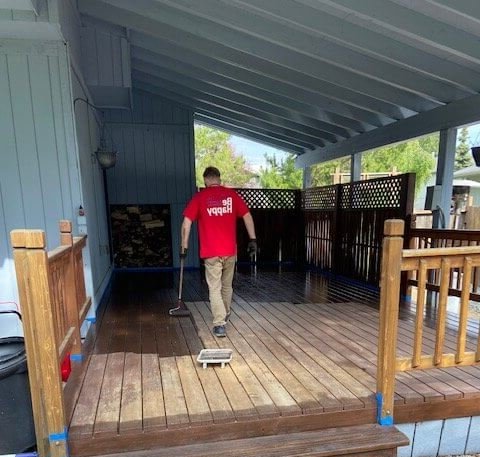
Apply sealant or stain on a dry, overcast day with temperatures between 50°F and 90°F. Avoid rainy or humid days, as moisture can interfere with curing. Use a brush, roller, or sprayer, starting at the farthest point and working toward your exit. Apply thin, even coats, following the wood grain. Avoid puddles or thick spots. Allow to dry completely—typically 24 to 48 hours—before replacing furniture or walking on the deck.
Most wood decks need resealing or staining every 1–3 years, depending on exposure and product used. To test if your deck needs resealing, sprinkle water on the deck: if it beads up, the seal is good; if it soaks in, it’s time to reseal.
Step 5: Furniture and Accessories
Clean outdoor furniture by washing tables, chairs, and benches with mild soap and water. For stubborn stains, use a soft brush. Rinse thoroughly and let dry before placing them back on the deck.
Protect your deck by using furniture pads under heavy items to prevent scratches. Avoid rugs or mats made of natural fibers, which can trap moisture and promote mold. Opt for synthetic outdoor rugs instead.
For planters and grills, place planters on risers or saucers to prevent trapped moisture. Move grills away from railings and siding to prevent heat or grease damage.
Step 6: Seasonal Deck Maintenance Checklist
In the spring, inspect for winter damage by checking for loose boards, nails, or screws. Clean thoroughly to remove winter debris and grime. Make repairs as needed before heavy summer use.
During the summer, sweep regularly to remove leaves and dirt. Reapply sealant or stain if needed. Trim back overhanging branches and vegetation to promote airflow and reduce debris accumulation. Check for splinters and sand as needed, especially if you have kids or pets.
In the fall, clean the deck before winter sets in. Inspect and repair any damage. Apply a fresh coat of sealant if needed to protect against snow and ice.
For winter, remove snow with a plastic shovel to avoid scratching the surface. Avoid using salt or chemical de-icers, which can damage wood and composite materials. Remove furniture and planters to prevent moisture buildup and wood rot.
Special Considerations for Alaskan Decks
Alaska’s freeze-thaw cycles can cause wood to expand and contract, leading to cracks and warping. Inspect your deck more frequently for these issues and use sealants and stains rated for extreme weather and UV exposure.
The combination of rain and shade can encourage mold growth. Clean affected areas promptly and consider adding a mildewcide to your stain for extra protection.
To prevent slippery surfaces, apply a marine-grade anti-slip product or self-adhesive grip strips to steps and high-traffic areas to improve safety, especially in wet or icy conditions.
Composite Deck Maintenance Tips
Composite decks are popular in Alaska for their durability and low maintenance requirements. However, they still need some care. Sweep regularly to remove debris. Wash with a soft brush and mild, composite-safe cleaner. Rinse thoroughly to prevent residue buildup. Avoid harsh chemicals and pressure washers, which can damage the surface. Inspect for mold or mildew and clean with soapy water as needed. Check for loose fasteners and tighten or replace as necessary.
DIY vs. Professional Deck Maintenance
Most homeowners can handle basic cleaning, inspections, and minor repairs. Deck maintenance kits are available and typically include cleaner, sealant, brushes, and instructions.
However, you should call a professional if you notice extensive mold, rot, or structural issues, need large repairs or complete resurfacing, or if your deck hasn’t been maintained in several years and needs a full restoration. Professional services can save time and ensure your deck is properly protected, especially in challenging climates like Alaska’s.
Deck Maintenance Cost Overview
The cost of deck maintenance varies depending on the task and whether you do it yourself or hire a professional. Cleaning and washing typically costs between $20 and $50 if you do it yourself, and $100 to $300 if you hire a professional. Sealing or staining ranges from $50 to $150 for DIY, and $200 to $600 for professional services. Repairs per board may cost $10 to $30 DIY, or $50 to $100 professionally. Full restoration is usually not a DIY job and can cost $500 to $2,000 or more, depending on the deck’s size, condition, and local labor rates.
Eco-Friendly Deck Maintenance
Choose biodegradable, non-toxic cleaners to protect your landscaping and local waterways. Opt for stains and sealants with low VOCs (volatile organic compounds) for better air quality. Recycle or compost debris and old boards when possible.
Frequently Asked Questions
How often should I clean my deck?
Sweep your deck weekly and do a thorough wash at least once or twice a year—ideally in spring and fall.
Do composite decks need to be sealed?
Most composite decks do not require sealing, but some can be stained or sealed with products specifically designed for composites if you want to refresh their appearance.
What’s the best way to remove mold from my deck?
Use a mild, deck-safe cleaner and a soft brush. For wood, a diluted bleach solution can help, but rinse thoroughly. For composite, use soapy water and avoid harsh chemicals.
How do I know if my deck needs to be resealed?
Sprinkle water on the deck surface. If it beads up, the seal is intact. If it soaks in, it’s time to reseal.
Can I use a pressure washer on my deck?
Yes, but use a low-pressure setting and keep the nozzle at least 12 inches from the surface to avoid damage, especially on wood or composite decks.

Jacob Bishop is the founder and CEO of Be Happy Property Services. With a strong background in property management and customer service, Jacob has dedicated himself to creating a company that prioritizes client satisfaction and seamless property experiences. His extensive knowledge and hands-on approach have earned him a reputation for excellence in the industry. Jacob’s passion for real estate and commitment to happy living spaces make him a trusted leader in property services.