
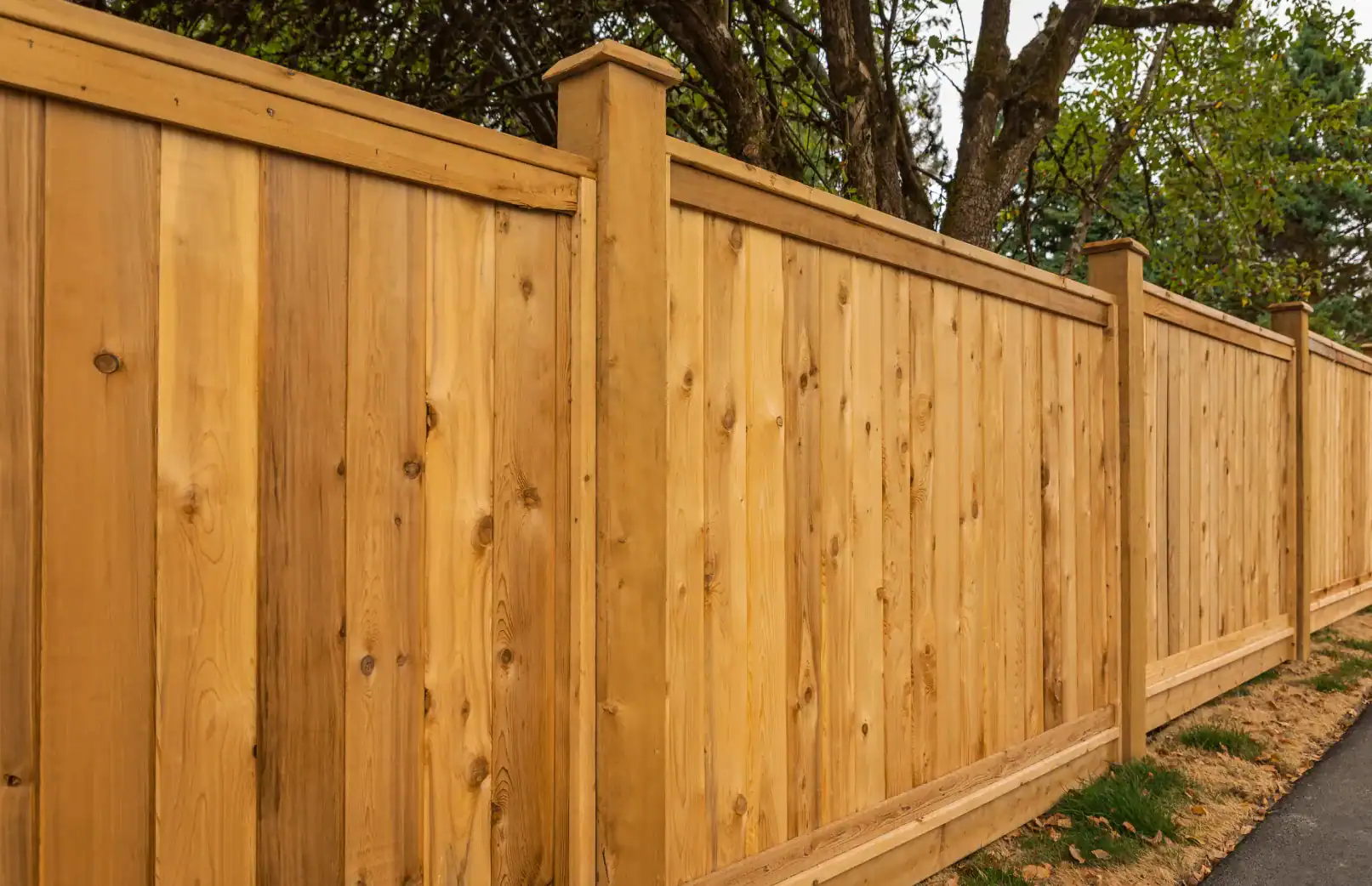
Choosing the right fence in Anchorage is not just about style.
It is about picking a material that can handle snow, wind, freezing temperatures, thaw cycles, shifting ground, and the everyday wear that comes with Alaska’s climate.
A fence that works well in a mild-weather area may struggle here. Posts can move. Gates can sag. Boards can warp. Panels can crack if the wrong material is used in the wrong setting.
That is why many homeowners ask the same question before starting a project: What is the best fence for Alaska weather?
The answer depends on your goals.
Some properties need privacy. Some need pet security. Some need a durable boundary with low upkeep. Others need a fence that looks warm and natural next to landscaping, garden beds, patios, or outdoor living areas.
For Anchorage homes, the most common choices are wood, vinyl, and chain-link. Each one can work well, but each one has different strengths and drawbacks.
This guide breaks down how each fence type performs under Anchorage conditions, what to consider before installation, and how to choose the option that best fits your property.
Why Anchorage Weather Makes Fence Choice So Important
Anchorage puts up fences a lot.
A good fence needs to stand through winter snow, spring thaw, wet soil, summer sun, and sudden temperature swings. Be Happy Property Services notes that fences in Anchorage must be durable enough to handle heavy snow loads and freezing and thawing cycles.
That freeze-thaw pattern matters.
When moisture enters the soil and freezes, the ground can expand. When it thaws, the soil settles again. Over time, that movement can affect fence posts, gates, and long straight fence lines.
This is one reason professional fence installation in Anchorage matters as much as the material.
Even a strong fence material can fail if the posts are not set correctly. A fence built for Anchorage needs proper below-ground planning, not just a good-looking finish above ground.
Snow is another key factor.
Heavy snow can push against lower fence sections. Plowed snow may pile against panels. Gates can become harder to open if the layout does not allow for winter clearance.
Wind also matters, especially for solid privacy fences.
A tall wood or vinyl privacy fence catches more wind than an open chain-link fence. That does not mean privacy fencing is a bad choice. It simply means the structure, post spacing, and installation quality need to match the local conditions.
If you want the best fence for Alaska weather, start by thinking about climate first and appearance second.
The right fence should look good, but it also needs to keep performing after the first winter.
What Makes a Fence “Weather-Ready” in Alaska?
A weather-ready fence is not just strong on day one.
It is built to keep its shape, function, and appearance over time.
In Anchorage, that means looking at several factors before choosing a material.
First, think about ground movement. Fence posts carry the whole structure. If posts shift, the fence line can lean, gates can drag, and panels can separate.
Second, think about moisture. Snow, rain, and seasonal thaw can expose fence materials to prolonged dampness. Materials that absorb water need more care.
Third, think about maintenance. Some fences need staining, sealing, painting, or repairs. Others need occasional washing and hardware checks.
Fourth, think about purpose. A fence for privacy has different needs than a fence for pets, security, or property lines.
Finally, think about curb appeal. Your fence is a visible part of your home. It should fit the look of the house, yard, and outdoor features.
Be Happy Property Services works with Anchorage outdoor conditions across property services, including landscaping and hardscaping, and notes that Alaska’s demanding environment requires weather-resistant outdoor solutions. (Be Happy Property Services)
That same idea applies to fences.
The fence should be chosen based on how Anchorage actually behaves, not on ideal weather.
Wood Fencing: Warm, Private, and Classic
Wood fencing remains one of the most popular choices for homeowners who want privacy and a natural look.
It works especially well for backyards, side yards, garden areas, and properties where appearance is a top priority.
Wood has a warmth that vinyl and chain-link do not fully copy. It can blend nicely with trees, lawns, planting beds, decks, patios, and natural outdoor spaces.
It is also flexible from a design standpoint.
You can choose different heights, board styles, spacing, cap details, and finishes. A wood fence can feel rustic, clean, modern, or traditional depending on the design.
For homeowners focused on privacy, wood is often a strong choice.
A solid wood privacy fence can block views, reduce distractions, and create a more comfortable yard for family time, pets, or outdoor gatherings.
But wood does require care in Anchorage.
Because wood is a natural material, it can absorb moisture. Snow, rain, and freeze-thaw cycles can affect boards over time. Without proper sealing or staining, wood may fade, crack, warp, or develop rot-prone areas.
This does not mean wood is a poor option.
It means wood is best for homeowners who like its look and are willing to maintain it.
If you want wood to be the best fence for Alaska weather on your property, installation and upkeep matter. Choose quality materials, use proper fasteners, keep the fence clear of unnecessary soil contact, and plan for routine sealing or staining.
A well-built wood fence can serve an Anchorage property well, but it should not be treated as a zero-maintenance option.
Pros of Wood Fencing in Anchorage
Wood has several advantages for Anchorage homeowners.
It offers strong privacy. If your goal is to block sightlines from neighboring yards, alleys, or streets, wood is one of the most effective choices.
It also looks natural. For homes with landscaping, gardens, or wooded surroundings, wood can feel like part of the property rather than an added barrier.
Wood is also easy to customize. Sections can be built to match slopes, gates, corners, and special yard layouts.
Repairs are often simple. If one board is damaged, it may be replaced without removing the entire fence line.
For homeowners who enjoy a classic outdoor look, wood is hard to beat.
Cons of Wood Fencing in Anchorage
The biggest drawback is maintenance.
Wood needs protection from moisture and weather exposure. Staining, sealing, or painting may be needed over time to preserve its appearance and reduce damage.
Wood can also move with changes in moisture.
Boards may shrink, swell, crack, or warp depending on weather exposure and material quality.
Snow buildup can be hard on lower boards. If snow sits against the fence for long periods, it may increase moisture exposure.
Wood may also cost more over time if maintenance is ignored.
The upfront price may be appealing, but the long-term value depends heavily on care.
For Anchorage homeowners who want privacy and natural beauty, wood can be a great choice. For those who want the lowest possible upkeep, another material may be better.
Vinyl Fencing: Clean Look with Lower Maintenance
Vinyl fencing is often chosen by homeowners who want privacy without the same level of maintenance as wood.
It has a clean, finished look and is commonly used for backyard privacy fences, side-yard enclosures, and decorative front-yard sections.
One major advantage of vinyl is that it does not need staining or painting.
It will not rot like wood. It does not absorb moisture in the same way. For many homeowners, that makes vinyl appealing in a snowy climate.
Vinyl is also easy to clean. In many cases, dirt or surface buildup can be washed off.
For Anchorage properties, vinyl can be a strong option when the product is high quality and the installation is done correctly.
But vinyl is not perfect.
Cold temperatures can make some lower-quality vinyl more brittle. Strong impacts during winter, such as heavy snow loads or accidental contact with equipment, may cause cracking if the material is not suited to the climate.
Vinyl privacy fencing also catches the wind.
Because the panels are solid, wind resistance must be considered. Posts need to be set properly, and the layout should be planned with Anchorage conditions in mind.
A vinyl fence may be one of the best choices for homeowners who want privacy and lower maintenance. But it should be selected carefully.
Not all vinyl products perform the same in cold climates.
Pros of Vinyl Fencing in Anchorage
Vinyl is low-maintenance compared to wood.
There is no need to stain or paint it. That can save time and effort over the years.
It also offers strong privacy. Solid vinyl panels can create a clean, enclosed yard.
Vinyl resists rot and insect damage. Since moisture is a major concern in snowy regions, this is a real advantage.
It also has a neat appearance. Many homeowners like vinyl because it looks polished and consistent.
For busy homeowners, vinyl can be a practical answer to the question of the best fence for Alaska weather, especially when privacy is a priority.
Cons of Vinyl Fencing in Anchorage
Vinyl can cost more upfront than some wood or chain-link options.
It also has less design flexibility than wood. While different styles are available, wood is easier to customize.
Cold-weather performance depends on product quality. Thin or poorly made vinyl may not be ideal for harsh freeze-thaw conditions.
Vinyl can also be difficult to repair in small sections. If a panel is damaged, replacing it may be more involved than swapping a single wood board.
Another consideration is wind. Solid vinyl panels need strong support because they do not allow air to pass through like chain-link.
For Anchorage homes in open or windy areas, vinyl should be planned carefully.
Chain-Link Fencing: Durable, Practical, and Budget-Friendly
Chain-link fencing is a practical choice for homeowners who want security, pet containment, and durability without paying for a full privacy fence.
It is commonly used for backyards, dog runs, side yards, utility areas, and property boundaries.
Chain-link has one major climate advantage: it is open.
Because wind and snow can pass through the mesh more easily than through solid panels, chain-link does not take the same kind of pressure as a full privacy fence.
That makes it useful in exposed areas.
Chain-link is also known for low maintenance. It does not need staining or painting like wood. It does not have solid panels that can crack like vinyl.
For many Anchorage properties, chain-link is a reliable and cost-conscious option.
The tradeoff is privacy.
Standard chain-link does not block views. Privacy slats can be added, but they increase wind resistance and affect how the fence handles weather.
Chain-link also has a more functional look. Some homeowners like it. Others prefer the warmer appearance of wood or the clean look of vinyl.
Still, if your main goals are budget, security, pet control, and weather performance, chain-link deserves serious consideration.
Pros of Chain-Link Fencing in Anchorage
Chain-link is one of the most practical fence materials for Anchorage’s weather.
It handles wind well because of its open design. This can be helpful on properties where solid fences may face heavy pressure.
It is also durable. A properly installed chain-link fence can withstand regular use with minimal upkeep.
Chain-link is often more affordable than full privacy fencing. That makes it a good fit for large yards or long property lines.
It works well for pets. Homeowners who need a secure outdoor area for dogs often choose chain-link because it creates a clear boundary without fully closing off the yard.
It is also useful when visibility matters.
If you want to see through the fence while still marking the property line, chain-link is a good option.
Cons of Chain-Link Fencing in Anchorage
The main drawback is limited privacy.
If your goal is a secluded backyard, standard chain-link may not be enough.
The appearance is also more basic. It may not add the same curb appeal as wood or vinyl.
Privacy slats can help, but they do not fully match the look of a true privacy fence. They can also make the fence catch more wind.
Chain-link may not be the best choice for front yards where style is a major concern.
For homeowners who want a clean, decorative, or natural look, wood or vinyl may feel more appealing.
But for function, strength, and value, chain-link remains a strong choice in Anchorage.
Wood vs. Vinyl vs. Chain-Link: Which One Handles Snow Best?
Snow affects each fence type differently.
Wood can handle snow well if it is properly built and maintained. The concern is moisture exposure, especially when snow piles against boards for long periods.
Vinyl does not rot from snow, which is a major advantage. However, impacts from compacted snow or equipment can be a concern if the material is not cold-weather rated.
Chain-link often performs well around snow because the open mesh does not trap snow the same way solid panels can. It is also easier to see snow buildup around the fence line.
For snow-heavy areas, the fence layout matters.
Avoid placing gates where snow naturally piles up. Think about where snow will be shoveled, plowed, or stored. Be Happy Property Services notes that heavy snowfall creates challenges for Anchorage properties, especially when access and safety are affected.
A fence should support the way your property works in winter.
That includes gate swing, access paths, driveway edges, and snow storage areas.
Which Fence Is Best for Privacy?
For privacy, wood and vinyl are the strongest choices.
Wood offers a natural look and strong coverage. It can be built in many styles and adjusted to match the property’s character.
Vinyl offers a cleaner, lower-maintenance privacy option. It is especially appealing to homeowners who want a neat fence without the need for regular staining.
Chain-link is not naturally private.
Privacy slats can help, but they do not create the same solid, finished feel as wood or vinyl.
If privacy is the top goal, choose wood for warmth and custom style. Choose vinyl for lower maintenance and a clean appearance.
For Anchorage homeowners, the best fence for Alaska weather and privacy is usually the one that balances solid construction with realistic upkeep.
A privacy fence must be stronger than a basic boundary fence because it catches more wind and holds more visual weight in the yard.
Which Fence Is Best for Pets?
For pets, chain-link is often the most practical choice.
It creates a secure boundary while allowing visibility. Dogs can see out, and homeowners can see in.
Chain-link is also good for larger yard areas because it is often more affordable over long runs.
Wood can also work well for pets, especially when privacy is important. A solid wood fence can reduce outside distractions for dogs that bark at movement.
Vinyl can work too, but the fence should be chosen and installed with pet behavior in mind. Large dogs that jump, lean, or scratch may put stress on panels.
For pet fencing, gates are just as important as fence material.
A weak gate can create problems even if the fence itself is strong. Latches, hinges, and post stability matter.
The bottom of the fence also matters.
Small dogs may try to dig. Snow buildup can change the effective height of a fence in winter. Plan with both summer and winter conditions in mind.
Which Fence Has the Lowest Maintenance?
Chain-link and vinyl are the lowest-maintenance options.
Chain-link usually needs only occasional checks for tension, posts, gates, and hardware.
Vinyl needs cleaning from time to time, but it does not require staining or painting.
Wood needs the most care.
It should be inspected for moisture damage, loose boards, peeling finish, and shifting sections. Staining or sealing can help extend its life.
That does not make wood a bad choice. It simply means wood is better for homeowners who value its appearance enough to care for it.
If you want a fence that looks good with less upkeep, vinyl may be the better choice for privacy.
If you want durability and functionality with minimal care, chain-link may be the better value.
How Fence Installation Affects Long-Term Performance
Material matters, but installation can make or break the project.
In Anchorage, the ground below the fence is just as important as the fence above it.
Be Happy Property Services notes that Anchorage soil conditions are unique and require careful handling for outdoor projects.
Fence posts need to be planned with those conditions in mind.
If posts are not set correctly, freeze-thaw movement can cause leaning, shifting, and gate problems. A fence may look straight at first, then start showing issues after one or two winters.
Gate placement is another key detail.
A gate should open easily in real life, not just on the day it is installed. Think about snow piles, grade changes, walking paths, and how the yard is used.
Drainage also matters.
Water should not sit around posts or collect along the fence line if it can be avoided. Moisture exposure increases stress on materials, especially wood.
Hardware should be chosen for outdoor use.
Hinges, latches, fasteners, and brackets need to withstand moisture and temperature fluctuations.
A good fence is a system.
Posts, panels, gates, hardware, drainage, and layout all need to work together.
Matching the Fence to Your Property Goals
The best fence for one Anchorage home may not be the best fence for another.
Before choosing, ask what the fence needs to do.
Do you want privacy from neighbors?
Do you need a safe area for pets?
Are you trying to define a property line?
Do you want to improve curb appeal?
Do you need a fence that works around landscaping, slopes, or outdoor features?
Do you want the lowest possible upkeep?
Your answers will guide the material choice.
For privacy and natural beauty, wood is a strong option.
For privacy with lower maintenance, vinyl is often the better fit.
For budget, pets, security, and weather performance, chain-link is a smart choice.
For some properties, a mix of materials may even make sense.
You might use wood or vinyl around a backyard patio, and chain-link along a less-visible side or rear property line.
The goal is not to choose the most expensive fence.
The goal is to choose the fence that fits your property, climate, budget, and long-term expectations.
So, What Is the Best Fence for Alaska Weather?
There is no single answer for every Anchorage property.
The best fence for Alaska weather depends on what you value most.
Choose wood if you want privacy, warmth, and a classic look, and you are comfortable with maintenance.
Choose vinyl if you want privacy, clean style, and lower upkeep, and you are willing to invest in a quality product.
Choose chain-link for durability, airflow, pet security, and budget-friendly performance.
For Anchorage weather, chain-link often wins for pure function and low maintenance. Vinyl often wins for low-maintenance privacy. Wood often wins for appearance and custom style.
The right choice comes from balancing climate performance with how you actually use your yard.
If a fence is planned well, installed properly, and matched to the property, it can improve security, privacy, curb appeal, and everyday comfort for years.
Be Happy Property Services understands the challenges Anchorage properties face, from snow and freeze-thaw cycles to soil conditions and outdoor durability. For homeowners comparing fence options, a local approach matters.
A fence is not just a boundary.
It is part of how your home works through every season.
Choosing the Right Fence in Anchorage
Anchorage weather does not leave much room for guesswork.
A fence has to be strong enough for winter, stable enough for shifting conditions, and practical enough for everyday use.
Wood, vinyl, and chain-link can all be good choices when used in the right setting.
Wood brings privacy and beauty but needs care.
Vinyl offers privacy and easier maintenance but requires high-quality materials and proper support.
Chain-link provides strength, value, and airflow but offers little privacy on its own.
Before deciding, think about your yard in winter, not just summer.
Look at where snow piles up. Think about where gates should go. Consider how much maintenance you want to take on. Decide whether privacy, price, appearance, or durability matters most.
When you choose with Anchorage conditions in mind, the result is a fence that does more than look good.
It works with the climate, supports your property, and makes your outdoor space easier to enjoy.
FAQs
What is the best fence for Alaska weather?
The best fence for Alaska weather depends on your needs. Chain-link is often best for low maintenance and wind performance. Vinyl is a strong choice for low-maintenance privacy. Wood is best for homeowners who want a warm, natural look and are willing to maintain it.
Is wood fencing a good choice in Anchorage?
Yes, wood fencing can be a good choice in Anchorage if it is properly built and maintained. It offers strong privacy and a classic appearance, but it needs staining, sealing, or other care to help protect it from moisture and weather exposure.
Does vinyl fencing hold up in cold weather?
Vinyl fencing can hold up well in cold weather when a quality product is used and installed correctly. Lower-quality vinyl may become more brittle in cold temperatures, so material selection is important for properties in Anchorage.
Is chain-link fencing good for snow and wind?
Yes, chain-link fencing is a practical option for snow and wind because its open mesh allows air and some snow movement through the fence. It is also low maintenance and often more affordable than solid privacy fencing.
Which fence is best for privacy in Anchorage?
Wood and vinyl are usually the best options for privacy in Anchorage. Wood offers a natural, custom look, while vinyl offers a cleaner appearance with less maintenance. Chain-link can include privacy slats, but it does not provide the same level of privacy as solid wood or vinyl.

Jacob Bishop is the founder and CEO of Be Happy Property Services. With a strong background in property management and customer service, Jacob has dedicated himself to creating a company that prioritizes client satisfaction and seamless property experiences. His extensive knowledge and hands-on approach have earned him a reputation for excellence in the industry. Jacob’s passion for real estate and commitment to happy living spaces make him a trusted leader in property services.