
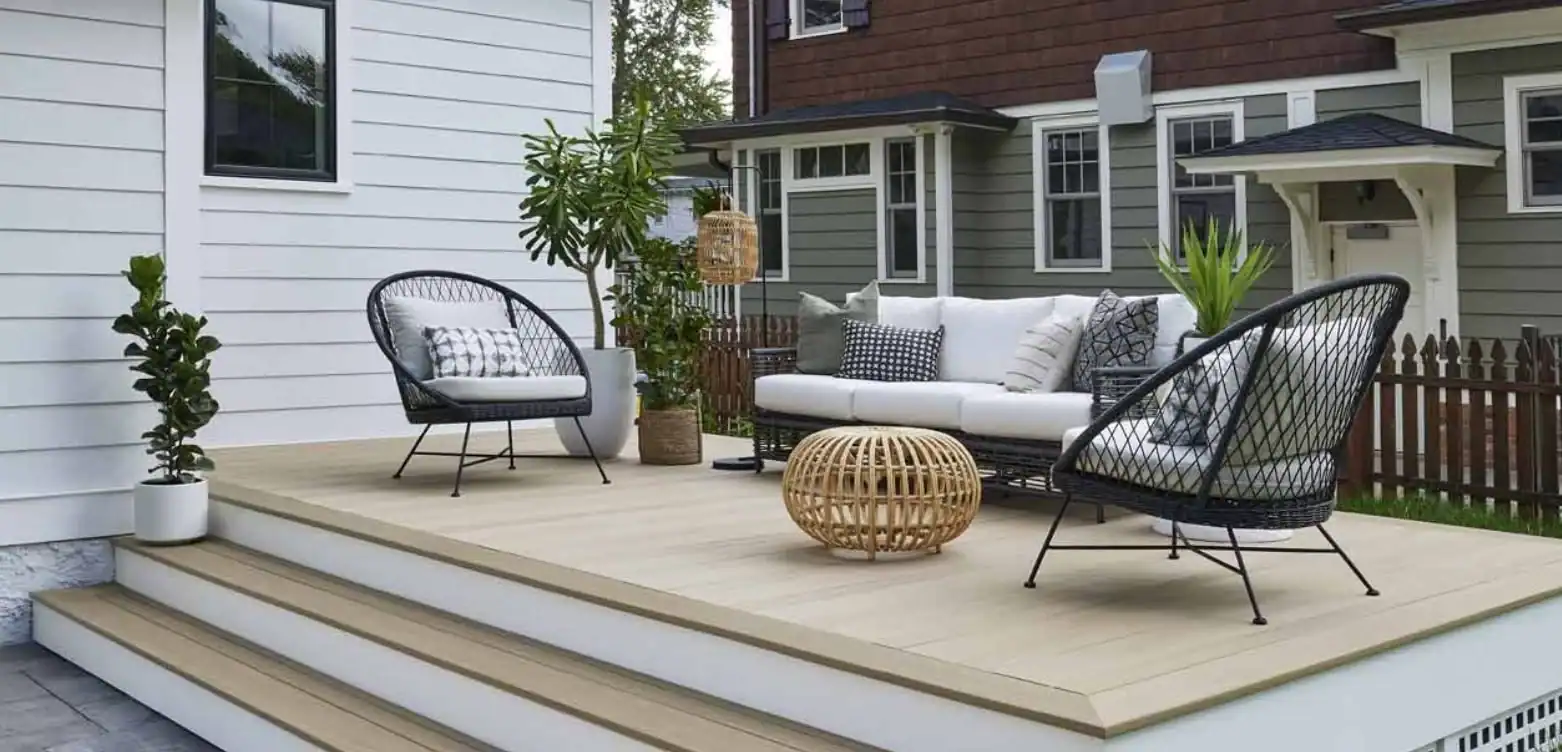
If you’re planning Anchorage deck building, your material choice matters more than almost any design detail. In a wet, cold climate, deck boards face steady moisture, freeze-thaw cycles, snow loads, grit, and long winters that test traction and durability.
The good news: you can build a deck that looks great and holds up for years. The key is matching the right material to how you’ll actually use the space, how much upkeep you’re willing to do, and what “value” means to you (lowest upfront price, lowest maintenance, or longest life).
This guide breaks down wood vs. composite specifically for Anchorage conditions, with real-world decision points that help you choose with confidence.
Quick takeaway
- Wood can look amazing and cost less upfront, but it needs regular protection from moisture and wear.
- Composite costs more initially, but usually wins on low-maintenance living and consistent performance in harsh weather.
If you’re weighing options for Anchorage deck building, Be Happy Property Services can help you plan the right system from framing to finish, so the deck works for your home and your winter.
What Anchorage Weather Does to Deck Boards
Anchorage decks don’t just “get wet.” They deal with repeated cycles that can push materials to fail early if the wrong product—or the wrong build method—is used.
The biggest stressors
Moisture exposure
Rain, snow melt, and damp air can soak boards for long stretches. Materials that absorb water can swell, cup, or split.
Freeze-thaw
Water expands when it freezes. If water gets into checks, cracks, or board fibers, freeze-thaw cycles can accelerate surface damage.
Snow management
Shovels, boots, ice-melt products, and grit can scrape surfaces and grind into the deck, especially in high-traffic areas.
Low sun angles and UV
Even in cooler temps, UV still breaks down finishes and fades color over time. Some composites also fade more than others, depending on the product line.
Traction concerns
A slick deck is a safety issue. Surface texture matters in wet conditions, and snow/ice management also plays a role.
This is why “the best deck board” isn’t universal. The best pick is the one that matches Anchorage realities and your household habits.
Wood Decking for Anchorage: Pros, Cons, and Best Uses
Wood is still a popular choice for Anchorage deck building for one big reason: it looks and feels natural. But wood is also a living material that responds to changes in moisture and temperature.
Main advantages of wood
Lower upfront cost
Many wood options (especially pressure-treated) can be cheaper up front.
Natural look
Wood grain, warmth, and the way it ages can be hard to beat.
Easy to modify
Cutting, trimming, and future changes (like steps or built-in seating) can be simpler with wood.
Good “feel” underfoot
Many homeowners like the texture and temperature feel of real wood.
Common drawbacks in wet, cold climates
Ongoing protection required
Staining or sealing is not optional if you want wood to last.
More movement
Wood can shrink, swell, cup, and crack, especially if it stays damp.
Surface wear
Snow tools, grit, and heavy foot traffic can rough up the surface.
Shorter lifespan if neglected
Wood decks that aren’t protected can age fast in Anchorage conditions.
The Most Common Wood Options for Anchorage Deck Building
1) Pressure-treated lumber (PT)
What it is: Wood infused with preservatives to resist decay and insects.
Why people choose it:
- Usually, the most budget-friendly wood option
- Widely available and versatile
What to watch for:
- It can warp or twist as it dries
- Often needs time to dry before staining/sealing (depends on product and moisture level)
- May splinter over time without maintenance
Best for: Homeowners who want a lower initial price and are willing to schedule upkeep.
2) Cedar
What it is: Naturally resistant to decay, often chosen for its look.
Why people choose it:
- Beautiful grain and color
- Lighter weight and comfortable underfoot
What to watch for:
- Softer than many woods, so it can dent more easily
- Needs regular sealing/staining in wet climates
- Color will fade if left unprotected
Best for: People who love a natural look and plan to keep up with sealing.
3) Redwood (less common in many markets)
What it is: A premium wood with natural decay resistance.
Why people choose it:
- Attractive finish and good stability (depending on grade)
- Naturally resistant compared to many woods
What to watch for:
- Can be pricey and not always easy to source
- Still needs protection to look its best long-term in wet climates
Best for: Homeowners chasing a premium natural appearance.
4) Hardwood decking (varies by species)
What it is: Dense wood species often used for high-end builds.
Why people choose it:
- Strong, durable, and visually impressive
- Can handle traffic well
What to watch for:
- Higher cost
- Requires proper fastening and installation techniques
- Needs oiling/finishing schedules depending on species and desired look
Best for: High-end decks where budget allows and maintenance is planned.
Composite Decking for Anchorage: Pros, Cons, and Best Uses
Composite boards are made from a mix of wood fibers and plastics, with many modern options including a “cap” layer for stain and fade resistance.
For Anchorage deck building, composite often shines because it doesn’t absorb water like wood and typically doesn’t require staining or sealing.
Main advantages of composite
Low maintenance
No regular staining or sealing is required in most cases. Cleaning is usually enough.
More consistent performance
Less swelling, splitting, and warping than typical wood when installed properly.
Long-lasting appearance
Many products are designed to resist staining, fading, and surface wear better than wood.
Fewer splinters
Great for barefoot use, kids, and pets.
Common drawbacks to consider
Higher upfront cost
Boards often cost more than wood, and some systems require specific fasteners and details.
Heat retention
Some composite colors can feel warmer in direct sun (often less of an issue in Anchorage, but still worth noting).
Brand/product differences matter
Not all composites perform the same. Surface texture, cap quality, and warranty details vary widely.
Snow and ice behavior
Composite can still be slippery if icy. Texture selection and snow management matter.

The Composite Choices That Matter Most in Anchorage
Capped composite vs. uncapped composite
- Capped composite has a protective outer layer that helps with stain resistance and color stability.
- Uncapped composite is less common today and generally less resistant to staining and moisture issues.
For Anchorage, a capped composite is usually the safer bet.
Surface texture
If you’re concerned about winter traction, choose a board with a textured finish, not an ultra-smooth finish. You’ll still need good snow removal habits, but texture helps.
Color selection
Medium tones often strike a good balance between hiding dirt and absorbing less heat than darker boards.
Wood vs. Composite in Anchorage: The Real Comparison
1) Moisture resistance
- Wood: Absorbs water, especially if not sealed. It can swell, cup, and crack over time.
- Composite: Typically resists water absorption much better (especially capped products).
Winner for wet conditions: Composite
2) Freeze-thaw durability
- Wood: If water enters checks and cracks, freeze-thaw can worsen damage.
- Composite: Generally less affected by freeze-thaw in the board material itself, but installation details still matter.
Winner for freeze-thaw cycles: Composite (with proper installation)
3) Maintenance workload
- Wood: Cleaning + regular staining/sealing schedule.
- Composite: Cleaning only for most owners.
Winner for low upkeep: Composite
4) Long-term costs
- Wood: Lower initial price, but maintenance costs add up.
- Composite: Higher initial price, often lower long-term upkeep costs.
Winner depends on your timeline:
If you plan to stay long-term and want less work, composite usually wins.
5) Appearance and feel
- Wood: Natural grain and warmth; can be refinished.
- Composite: Consistent look; many modern boards look very realistic, but it’s still a manufactured product.
Winner depends on preference: Tie
6) Traction and safety
- Wood: Can be grippy when maintained; can get slick if algae or buildup forms.
- Composite: Texture varies; some are excellent for grip, others less so.
Winner: Depends on the specific board texture and cleaning habits.
The “Hidden” Factor: Framing and Build Details Matter as Much as Boards
In Anchorage deck building, the board type is only half the story. A deck can fail early if drainage, ventilation, and fastening choices are wrong.
Substructure choices
Pressure-treated framing is common for both wood and composite surfaces. The goal is to keep water from sitting on framing and fasteners for long periods.
Proper spacing
Deck boards need correct gapping to allow drainage and seasonal movement. Composite and wood often require different spacing rules.
Fasteners and corrosion resistance
Anchorage conditions plus moisture exposure mean fasteners should be rated for outdoor use and compatible with treated lumber.
Drainage and airflow
Trapped moisture is a deck’s enemy. Good airflow underneath helps both wood and framing last longer.
If you’re comparing materials, also compare the full system: framing, hardware, railings, stairs, and how water moves off the deck.
Best Material Picks by Homeowner Type
If you want the lowest upfront cost
Pressure-treated wood is usually your starting point.
Plan to protect it with a stain/sealer and perform periodic maintenance.
If you want low maintenance
Capped composite is often the best fit.
You’ll likely spend less time on upkeep and more time actually using the deck.
If you want a natural look and don’t mind upkeep
Cedar can be a great option when finished and maintained on schedule.
If you want the “long-game” value
Composite often provides strong value over time, especially for busy households that don’t want annual staining projects.
Common Anchorage Deck Building Mistakes When Choosing Materials
Picking boards based on looks only
Some boards look great in a sample, then show scuffs, dirt, or fade faster than expected. Think about traffic, pets, and snow habits.
Ignoring traction
Winter safety is real. Choose a texture that supports grip, and plan snow removal to avoid damaging the surface.
Underestimating wood maintenance
Wood can perform well in Anchorage, but it needs protection. Skipping sealing/staining is the fastest path to early aging.
Assuming all the composites are the same
Different product lines can behave differently. Pay attention to surface texture, stain resistance, and the wording of the warranty.
How to Decide: A Simple Checklist
If you want a fast way to choose, answer these honestly:
- Do you want to stain/seal every so often?
- If no, lean composite.
- Is your budget tight right now?
- If yes, lean pressure-treated wood (with a protection plan).
- Will kids, pets, and heavy traffic use this deck?
- Composite often handles daily wear with less surface damage and fewer splinters.
- Do you want a natural wood look you can refinish?
- Lean wood.
- Do you want the deck to look similar year after year with minimal effort?
- Lean composite.
Planning Your Project with Be Happy Property Services
A strong deck in Anchorage is built with the right materials and the right structure for the climate. If you’re exploring Anchorage deck building, start with a clear plan: how you’ll use the deck, what maintenance you’ll actually do, and what performance you need through winter.
If you’d like help mapping out the best option for your home, Be Happy Property Services can guide you from material selection to installation details that support durability.
FAQs: Wood vs. Composite for Anchorage Deck Building
1) Is composite decking worth it in Anchorage?
For many homeowners, yes—especially if you want low maintenance and consistent performance in wet, cold conditions. The higher initial cost often balances out over time.
2) What’s the best wood for an Anchorage deck?
Pressure-treated lumber is common for value, while cedar is chosen for its natural look. The “best” option depends on budget and how reliably you’ll seal or stain it.
3) Will composite decking get slippery in winter?
Any deck surface can get slippery with ice. Choosing a board with a good texture, keeping the surface clean, and using smart snow-removal habits help reduce risk.
4) How often does a wood deck need sealing or staining in Anchorage?
It depends on exposure, product choice, and wear, but many wood decks benefit from a regular protection schedule. Skipping protection usually shortens the deck’s good-looking years.
5) Can I mix materials—like composite boards with wood framing?
Yes, that’s very common. Many composite decks are installed over pressure-treated framing. The key is correct spacing, fasteners, and drainage to prevent moisture from getting trapped.

Jacob Bishop is the founder and CEO of Be Happy Property Services. With a strong background in property management and customer service, Jacob has dedicated himself to creating a company that prioritizes client satisfaction and seamless property experiences. His extensive knowledge and hands-on approach have earned him a reputation for excellence in the industry. Jacob’s passion for real estate and commitment to happy living spaces make him a trusted leader in property services.