Spring is your lawn’s opportunity to rebound from winter’s toll and prepare for months of vibrant growth. Taking the time to properly clean and revitalize your yard in the early season sets the foundation for a lush, healthy lawn all year long. From clearing away the remnants of winter to giving your grass the nutrients it needs, a comprehensive spring clean-up is a vital step for any homeowner who wants a thriving outdoor space.
Why Spring Lawn Clean-Up Matters
A well-executed spring clean-up does much more than just tidy up your yard—it revitalizes your lawn’s ecosystem and encourages robust growth. Here’s why this process is so important:
-
Clears Winter’s Leftovers
Leaves, twigs, and other debris can smother your grass and prevent sunlight from reaching the soil. Removing these materials is the first step to a healthier lawn. -
Prevents Thatch Problems
Thatch—a layer of dead grass and roots—can choke your lawn if not managed. De-thatching opens up the soil, letting water, air, and nutrients reach the roots and promoting dense, green growth. -
Boosts Soil Health
Cleaning and aerating your lawn improves soil structure, allowing roots to absorb more nutrients and water. This creates the perfect environment for your grass to thrive.
For more on amending Anchorage’s difficult ground, see our guide to soil improvement techniques. -
Reduces Pests and Diseases
Debris and dead grass create ideal conditions for pests and fungi. A clean lawn is less likely to attract unwanted visitors and more resistant to disease. -
Improves Curb Appeal
A clean, vibrant lawn enhances your home’s appearance and can even boost its value. It also makes your outdoor space more enjoyable for family and guests.
How to Prepare Your Lawn for Spring
Follow these steps for a thorough spring clean-up:
-
Clear Debris
Start by removing all leaves, branches, and other debris from your yard. This gives your lawn a fresh start and prevents pests from settling in. -
Rake and De-Thatch
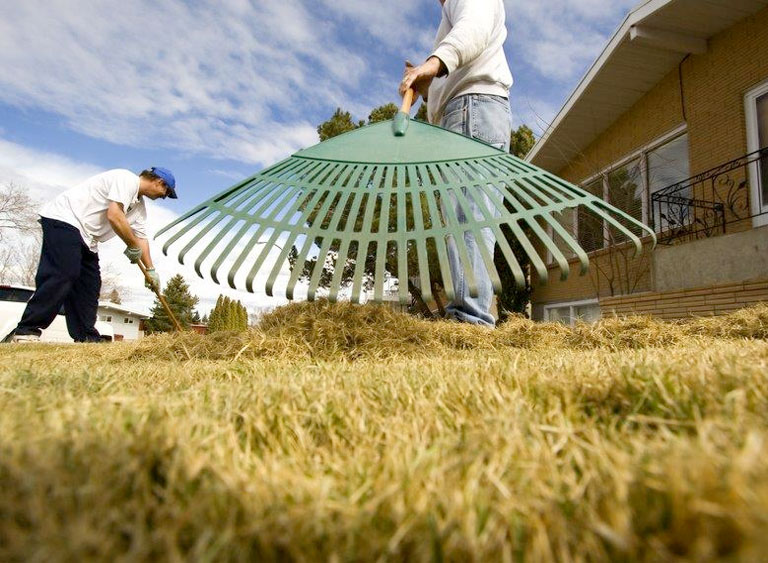
Use a rake or power rake to remove dead grass and thatch. This process exposes the soil and helps new grass grow strong and healthy. -
Prune and Trim
Trim back any overgrown trees or shrubs that are shading your lawn. This improves airflow and ensures your grass gets enough sunlight. -
Edge and Define
Re-edge your garden beds for a neat appearance and to keep grass from invading your flower beds. -
Aerate and Fertilize
Aerate your lawn to relieve soil compaction and improve nutrient absorption. Apply a spring fertilizer to give your grass the boost it needs for rapid growth. -
Water and Maintain
Keep your lawn consistently watered in the first weeks of spring. Established lawns need about an inch of water per week, while new lawns may require more frequent watering.
Key Lawn Care Terms Explained
-
Aeration
Aeration involves removing small plugs of soil to help air, water, and nutrients reach the roots. This process reduces compaction, improves lawn health, and prevents runoff. -
De-Thatching
De-thatching removes the layer of dead grass and debris that can block water and nutrients. This encourages new grass growth and prevents weed invasion. -
Over-Seeding
After aeration and de-thatching, over-seeding fills in bare spots and creates a thicker, more resilient lawn. This helps prevent weeds and ensures a uniform appearance. -
Fertilizing & Weed Control
Applying the right fertilizer and weed control products gives your lawn the nutrients it needs and keeps weeds at bay. Overuse can damage your grass, so professional guidance is recommended.
Frequently Asked Questions
1. What is the best time to start spring lawn clean-up?
Spring clean-up should begin as soon as the snow melts and the ground is dry enough to work on. Early spring is ideal for preparing your lawn for the growing season.
2. How often should I de-thatch my lawn?
De-thatching is typically needed every two years, depending on your lawn’s condition and grass type. Lawns with heavy thatch buildup may require more frequent attention.
3. Can I aerate my lawn myself?
Yes, homeowners can aerate small lawns using manual or mechanical aerators. For larger lawns or if you’re unsure, professional services can ensure the job is done correctly.
4. What are the benefits of over-seeding?
Over-seeding fills in thin or bare areas, creates a denser lawn, and helps prevent weed growth. It’s best done right after aeration and de-thatching for optimal results.
5. Why should I hire a professional for lawn care?
Professional lawn care services have the expertise and equipment to handle aeration, de-thatching, fertilizing, and weed control efficiently. They can also provide personalized advice based on your lawn’s specific needs.
Do you need to sign up for lawn maintenance services with Be Happy Property Services?
Contact us today! One call, we do it all!

Jacob Bishop is the founder and CEO of Be Happy Property Services. With a strong background in property management and customer service, Jacob has dedicated himself to creating a company that prioritizes client satisfaction and seamless property experiences. His extensive knowledge and hands-on approach have earned him a reputation for excellence in the industry. Jacob’s passion for real estate and commitment to happy living spaces make him a trusted leader in property services.