
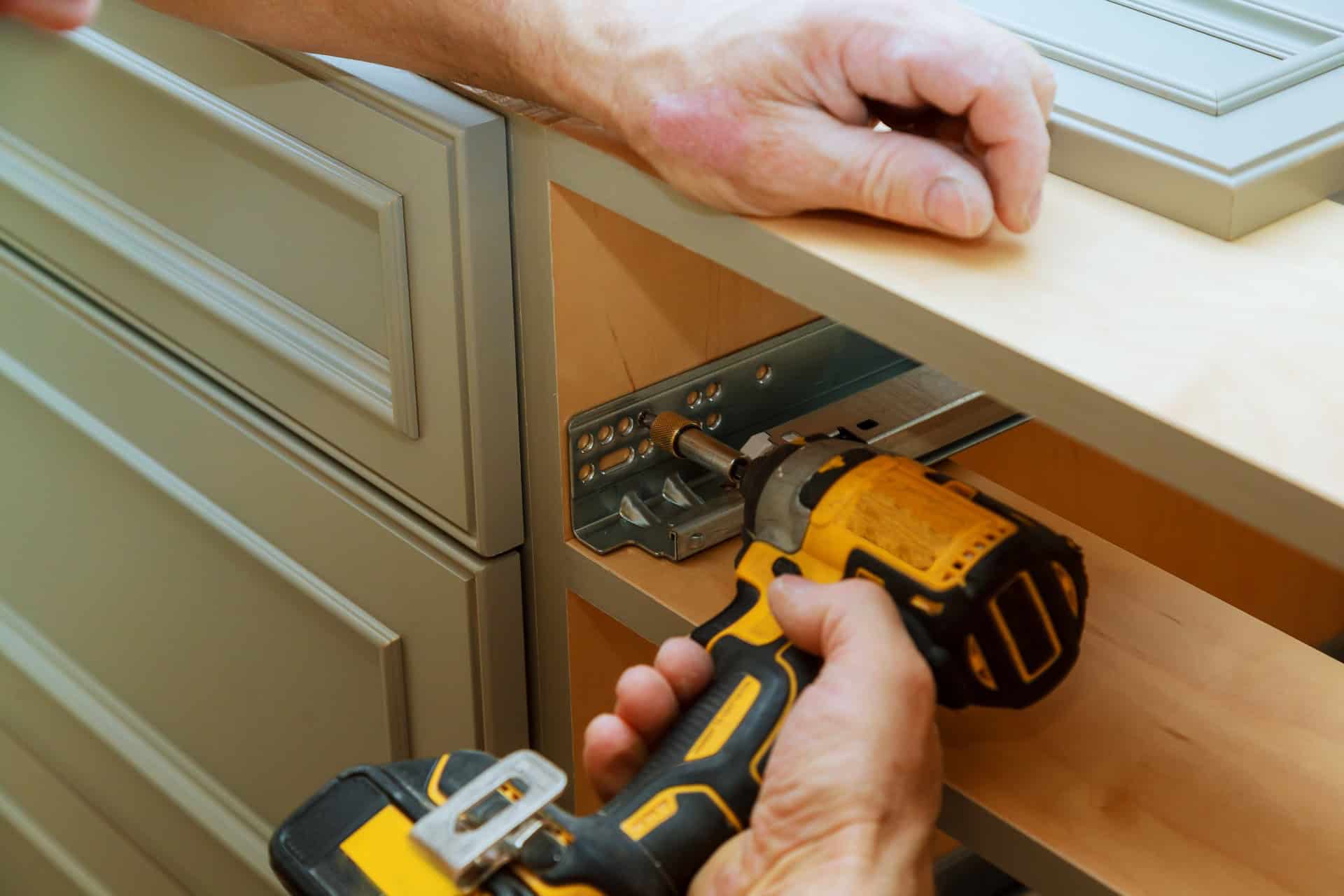
Homeowners run into this question all the time.
A repair comes up, something stops working, damage starts showing, or a small project keeps getting pushed back. Then the same thought comes up: should I call a handyman or a contractor?
It sounds like a simple decision.
In real life, it often is not.
Many home repair jobs fall into a middle area where homeowners are not fully sure what kind of help they need. The issue may seem small, but it’s not tiny. It may look like a quick repair, but it also seems important enough that you do not want the wrong person handling it. That uncertainty is exactly why so many homeowners search for when to call a handyman vs. a contractor.
The good news is that the choice usually becomes much easier once you understand the role each one typically fills.
A handyman is often the practical choice for smaller repair and maintenance tasks, especially when the work is straightforward, limited in scope, or part of a list of everyday home fixes. A contractor is usually the better fit when the project is larger, more involved, includes multiple phases, or goes beyond simple repair work.
Knowing the difference can save you time.
It can also save you money, reduce delays, and help you avoid turning a simple repair into a bigger process than it needs to be.
This guide explains when to call a handyman vs. a contractor, which kinds of jobs usually fit each, and how to tell which option makes the most sense for your home.
Why homeowners get stuck on this decision
Part of the confusion comes from how repairs actually happen.
Not every home issue clearly announces itself as a small job or a large project. A cracked tile might just need one repair. Or it might point to a larger moisture problem. A sticking door may only need adjustment. Or it may be part of a bigger issue involving framing, wear, or shifting.
That is why homeowners often hesitate.
They do not want to under-call the job and end up needing more help later. But they also do not want to over-call the job and bring in a larger service setup for something that could have been handled more simply.
The wording of the problem can also be misleading.
A job that sounds minor can take more work than expected. A job that sounds serious can sometimes be fixed with a focused repair. That is why it helps to think less about the problem’s name and more about the size, complexity, and condition of the work involved.
Once you do that, the difference between a handyman and a contractor becomes clearer.
What a handyman is usually best for
A handyman is typically a strong fit for smaller home repairs, upkeep tasks, and minor installations.
These are the types of jobs that do not usually require a full project structure. They are often limited to one area, one visit, or a practical list of small fixes around the home.
A handyman is often the right choice when the work is focused on maintenance, repair, adjustment, replacement, or improvement that does not turn into a major build or renovation.
Common examples include:
- Fixing a leaky faucet
- Repairing loose trim
- Replacing damaged caulk
- Patching minor drywall damage
- Fixing door hardware
- Replacing a light fixture
- Re-securing loose bathroom tile
- Repairing shelves, hinges, or cabinet hardware
- Handling a punch list of small household repairs
These are the kinds of tasks many homeowners delay because each one feels too small to turn into a full project.
That is exactly where handyman service becomes useful.
Instead of dealing with each issue separately, homeowners can often group several repairs into a single visit, keeping the process simple.
What a contractor is usually best for
A contractor is generally the better fit when the work is larger, more involved, or involves multiple moving parts.
This usually includes jobs that go beyond basic repair and move into full replacement, major updates, broader renovation work, or coordinated project activity.
A contractor often makes sense when the project affects a larger section of the home or when the work is no longer just about fixing one thing.
Examples can include:
- Large remodels
- Major structural work
- Full room renovations
- Bigger demolition and rebuild work
- Projects involving multiple work stages
- Large exterior improvement jobs
- Whole-room replacement projects
- Work that includes several different trades or larger coordination needs
In these situations, the job is usually not just about fixing the issue.
It is about managing a larger scope of work from start to finish.
The simplest way to think about it
A good rule of thumb is this:
If the job is small, contained, repair-focused, and practical, a handyman is often the better call.
If the job is large, multi-step, full-scale, or likely to expand into a bigger project, a contractor is usually the better fit.
This rule is not perfect for every situation.
Still, it helps most homeowners sort out the first decision without getting stuck.
When people ask when to call a handyman vs. a contractor, they are often really asking a more basic question.
Is this a repair job or a project job?
That question gets to the heart of it.
When to call a handyman vs. a contractor for common home repairs
Let’s make it more practical.
Here is how homeowners can think through the decision in everyday situations.
Drywall damage
If the drywall issue is small, such as a hole, dent, crack, or patchable damage in one area, a handyman is often the practical choice.
If the damage is widespread, tied to broader moisture issues, or part of a larger remodel or rebuild, a contractor may be a better option.
Bathroom tile issues
If one or a few tiles are cracked or loose, a handyman is often a good option.
If the tile damage spans a larger area, is tied to major moisture failure, or is part of a full bathroom redo, that points more toward contractor-level work.
Door and trim repairs
A sticking door, damaged trim section, or loose hardware usually fits a handyman visit well.
If multiple doors, framing issues, or larger finish replacement work are involved throughout the home, the scope may lean toward larger work.
Small kitchen updates
Replacing hardware, adjusting doors, fixing trim, or handling smaller repair items often fits handyman work.
A full kitchen overhaul with major layout changes or broad replacement work falls into a different category and is more likely to require a contractor.
Exterior maintenance items
Smaller outdoor fixes, trim touch-ups, or minor repair work may be good handyman tasks.
Larger outdoor projects with extensive scope, major replacement, or bigger build plans usually go beyond that range.
Signs a handyman is probably the right call
Sometimes the best answer comes from the nature of the job itself.
A handyman is probably the right choice when:
- The repair is relatively small
- The work is limited to one area
- You have a short list of minor fixes
- The project is mostly repair or upkeep
- You want practical help without turning it into a major project
- The job seems manageable in one visit or a simple appointment
- You are trying to catch a problem before it becomes bigger
This is the part many homeowners overlook.
A handyman is not only for problems that are already small. A handyman can also be the smart call for issues that are still small now, but may get worse if ignored.
That includes loose tile, trim damage, minor drywall wear, caulk failure, sticking doors, hardware issues, and similar everyday home problems.
Signs that a contractor is probably the better choice
A contractor is often the better fit when the job has moved past simple repair.
That usually means the work is no longer contained, no longer minor, or no longer predictable as a single straightforward fix.
You may want to call a contractor when:
- The project is large in scope
- The work affects a major section of the home
- Multiple phases are involved
- The job includes broad removal and replacement
- The work is part of a remodel
- Several types of work need to be coordinated together
- The project may continue over a longer timeline
- The issue appears bigger than surface-level repair
In those cases, the homeowner is no longer really looking for a repair visit.
They are looking for a larger project setup.
Why starting with the wrong type of help causes frustration
This is where many homeowners lose time.
If you call a contractor for a short list of small repair tasks, the process may feel bigger, slower, or less practical than necessary. On the other hand, if you treat a large renovation-style project like a basic repair call, you may end up underestimating what the work really requires.
The problem is not only cost.
It is also momentum.
When the wrong kind of service is brought in first, the homeowner often ends up repeating the process, re-explaining the issue, waiting longer, and feeling less clear than before.
That is why understanding when to call a handyman vs. a contractor matters so much.
The right match helps the repair move forward with less confusion.
Why homeowners often overestimate small repair jobs
Many home issues look more dramatic than they are.
A loose towel bar, cracked grout, damaged trim corner, or a sticking interior door can feel like the start of a large project simply because it has been annoying for a while. The longer homeowners live with a problem, the more mentally taxing it can feel.
But not every frustrating repair needs a contractor.
Many day-to-day home issues fall squarely within a handyman’s range of work. In fact, many homeowners wait too long because they assume they need a larger setup, when what they actually need is practical repair support.
This matters because delayed repairs often grow.
A problem that could have been handled early as a focused handyman repair may later spread into something larger.
Why homeowners sometimes underestimate bigger problems
The reverse also happens.
Some issues seem small only because the real problem is hidden.
A cracked tile may indicate a deeper moisture issue. Repeated drywall damage may reflect a larger source problem. A sticking door may suggest more than a hinge adjustment if the surrounding conditions have changed over time.
That is why it helps to pay attention to patterns.
If the same issue keeps coming back, if the damage is spreading, if multiple areas are involved, or if the repair no longer feels isolated, the job may be moving beyond routine handyman territory.
The goal is not to panic.
The goal is to notice when the problem has stopped being a small repair and started becoming a larger project.
How to think about repairing the right way
One of the best ways to decide when to call a handyman vs. a contractor is to stop looking only at the visible damage.
Instead, ask these questions:
- Is this one repair or part of a larger condition?
- Does the work seem isolated or spread out?
- Is the goal to fix, adjust, patch, or replace one area?
- Or is the goal to redo, rebuild, or transform a larger section?
- Can this reasonably be handled as a practical repair visit?
- Or does it sound more like a full project with a broader scope?
Those questions usually get you closer to the right answer than the repair name itself.
For example, “bathroom issue” is too broad.
A loose tile is different from a full bathroom update. A caulk repair is different from a full shower rebuild. A damaged cabinet hinge is different from a full kitchen renovation.
This is why broad labels are less useful than an honest scope.
The value of a handyman for everyday home maintenance
Many homeowners only think about repair help when something breaks badly.
But one of the biggest benefits of a handyman is their ability to handle the steady wear that builds up in a home over time.
Small problems are normal.
Caulk wears out. Trim gets damaged. Doors shift. Hardware loosens. Tiles crack. Drywall gets dinged. Fixtures start showing age. None of these issues automatically calls for a contractor.
This is where handyman service fits into home ownership practically.
It helps homeowners keep up with the repair list before it becomes a bigger issue. It also helps reduce the pileup of unfinished tasks that make a home feel harder to manage.
For many households, that alone makes the choice easier.
If the work is a list of everyday repairs, the answer often points toward a handyman.
The value of a contractor for larger change
A contractor becomes the stronger choice when the homeowner is no longer simply trying to maintain the home.
Instead, they are taking on a larger change.
That could mean redoing a room, replacing a large section of the home, tackling a much larger construction project, or moving through a longer, multi-stage process.
At that point, the value is not only in getting the work done.
It is in handling the larger project structure that comes with it.
This is why contractor work often makes more sense when the homeowner’s goal is not “fix this.”
It is “change this whole area.”
That is a very different kind of need.
A practical way to avoid wasting time or money
If you want a simple working rule, use this:
Call a handyman for repair lists, small fixes, minor replacements, and practical upkeep.
Call a contractor for larger projects, major updates, full replacements, and bigger renovation-style work.
That approach will not solve every edge case.
But it will help most homeowners avoid the two biggest mistakes:
Treating a small repair like a major project
Treating a major project like a small repair
Both mistakes cost time.
Both can also make the process feel harder than it should.
Where Be Happy Property Services fits
For homeowners dealing with smaller home repair needs, Be Happy Property Services fits the kind of practical handyman support that makes sense for everyday maintenance and repair work.
That is especially useful when the issue is not a full renovation.
If the goal is to address smaller problems around the home, catch wear before it spreads, or handle a list of repairs in a direct, manageable way, a handyman service is often the more realistic option.
That is exactly why understanding when to call a handyman vs. a contractor matters.
Sometimes the smartest move is not to think bigger.
It is to match the job to the right level of help.
Knowing when to call a handyman vs. a contractor becomes much easier once you stop thinking only in terms of job titles.
Instead, think about scope.
If the work is small, repair-focused, limited in scope, and practical, a handyman is often the right call. If the work is larger, more involved, spans a larger area, or is part of a full update, a contractor is usually the better choice.
That difference matters because the right fit saves time.
It also helps you avoid overspending, overcomplicating the repair, or delaying the job because the next step feels unclear.
Most homeowners do not need a complicated formula.
They just need a simple way to look at the work honestly.
Is this a repair?
Or is this a project?
That question will usually lead you to the right answer.
FAQs
1. What is the main difference between a handyman and a contractor?
A handyman is usually best for smaller repair and maintenance tasks, while a contractor is generally the better choice for larger projects, major updates, or multi-step work.
2. When should I call a handyman instead of a contractor?
Call a handyman when the job is small, limited in scope, repair-focused, or part of a list of everyday home fixes.
3. When should I call a contractor instead of a handyman?
Call a contractor when the job is large, more involved, part of a renovation, or likely to require broader project coordination.
4. Can a handyman handle more than one repair in the same visit?
Yes. In many cases, homeowners get the most value by grouping several small repairs into one handyman appointment.
5. How do I know if my repair is becoming a bigger project?
If the issue is spreading, affecting multiple areas, recurring, or involving a larger section of the home, it may be moving beyond simple repair work.

Jacob Bishop is the founder and CEO of Be Happy Property Services. With a strong background in property management and customer service, Jacob has dedicated himself to creating a company that prioritizes client satisfaction and seamless property experiences. His extensive knowledge and hands-on approach have earned him a reputation for excellence in the industry. Jacob’s passion for real estate and commitment to happy living spaces make him a trusted leader in property services.